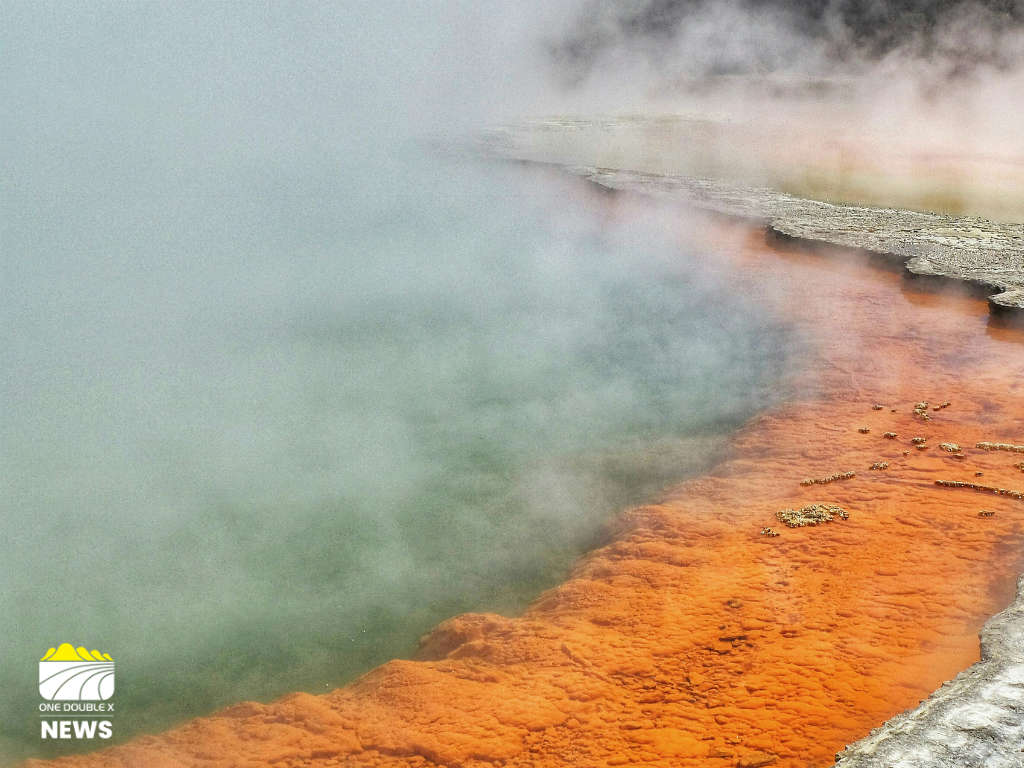
Discussions with community stakeholders will begin today after Auckland University’s Whakatāne Geothermal Temperature Gradient Well Programme received $3 million in Government funding earlier this week.
Co-Director of the Geothermal Institute, Dr John O'Sullivan, said the project will explore the geothermal activity under Whakatāne.
While Whakatāne is on the edge of the Taupō Volcanic Zone, the extent of geothermal activity in the area remains unclear.
Three wells will be drilled to provide clearer insights into the activity and if it could be used as an energy source.
O’Sullivan expects drilling to begin later this year.
"There's things happening all over the world that are making energy security more important.”
“And so, the sooner we can have a better understanding of what the potential might be in Whakatāne, the sooner people will be able to make decisions about whether or not they could invest in geothermal infrastructure,” he said.
Discussions with stakeholders are now moving into a more detailed phase, following earlier preliminary conversations.
Upcoming meetings with local stakeholders and iwi groups will focus on identifying the most suitable drilling locations before planning begins.
"We've got meetings to talk with local stakeholders, iwi groups ... so, just clarifying what the best options are before we start planning the wells themselves.”
Companies that will be involved in drilling the wells have not yet been confirmed.
Community involvement will be a central part of the project as it progresses.
“We are going to be looking at setting up a governance group as well to make sure that those community voices are heard throughout the project,” he said.
Stakeholders and community members will look at the preferred scientific options before discussing what “the nuances of those options are going to be the best in terms of the feasibility and their impact of carrying out the scientific drilling and exploration drilling.”
He assured the community that all results will be shared openly, and next steps will be decided by stakeholders and the community.
“Community groups or industry groups can then use it to make decisions about, using that resource to build industry or reduce their reliance on fossil fuels, gas or coal or for boilers and things.”
The project is for “public good” and could provide a template for work in other towns, or provide benefits to New Zealand more widely.
O’Sullivan is hopeful exploration will identify a viable geothermal resource in the region.
“We think it could be a great step change for Whakatāne we're really hopeful there's some good signs.”
If there is “a good economically viable resource that people of Whakatane can use, then I'm sure Kiwi ingenuity is going to come up with innovative ways to use it.”
There are existing industries in Whakatāne that would benefit from a positive discovery, so he is hopeful the project will lead to growth, innovation, and job creation.
East Coast MP Dana Kirkpatrick said it is a fantastic opportunity for the Eastern Bay and expands on an industry “we have excelled in.”
“These are not projects we undertake lightly.”
The project addresses the need for diversified energy sources across the country, she said.
If a substantial resource is found, it could place the Eastern Bay at the centre of this innovation.
 Community Reference Group for Awakeri Development Opens
 New Geothermal Projects Strengthen Kawerau's Energy Industry Ahead of TOPP2 Opening
 Coterie Are Coming to Ōpōtiki Bringing the Heat and New Tracks
 Air Chathams Braces for Fuel Cost Surge as Demand Softens in Some Regions