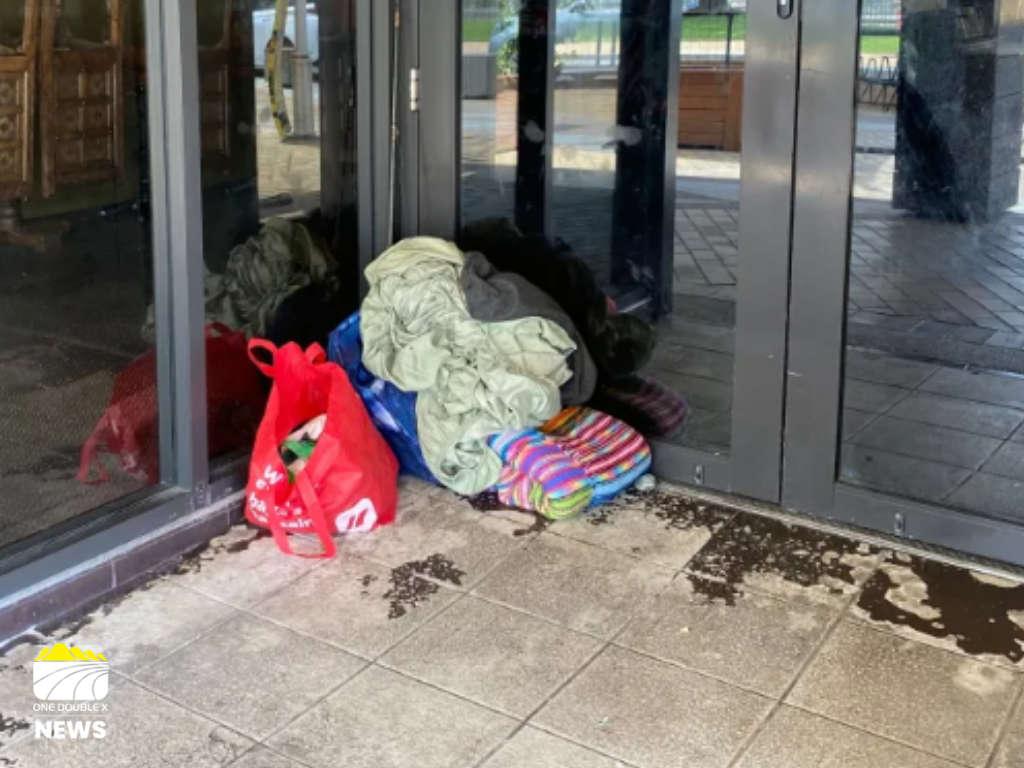
The Government's plan to give police authority to issue move-on orders in public places is drawing mixed reactions in Whakatāne, where homelessness is increasing, and support is stretched.
Earlier this week, Justice Minister Paul Goldsmith and Police Minister Mark Mitchell announced amendments to the Summary Offences Act that will allow police to ask people to leave a specific area for up to 24 hours.
The new authority will apply to people aged 14 or older; “displaying disorderly, disruptive, threatening or intimidating behaviour, obstructing or impeding someone entering a business, breaching the peace, all forms of begging, rough sleeping, or behaviour indicating an intent to inhabit a public place."
Failure to comply could result in fines of up to $2,000 or imprisonment for up to three months.
Minster Paul Goldsmith said the changes were about restoring safety and order in town centres.
"New Zealanders are fair-minded people, and our culture is one where we seek to help those who are in need, but that doesn't mean we should accept our city centres, particularly our showcase tourist spots, becoming places of intimidation and dysfunction," he said.
Minister Mark Mitchell said the orders would give frontline officers "additional enforcement powers" and that police would assess what support services people may require when issuing an order.
"Police officers are familiar with the locations they work with and already have strong networks and partnerships with social and housing services," he said.
In Whakatāne, some community representatives are concerned about the effect the orders could have on already vulnerable whānau.
District Councillor Toni Boynton said the district had seen an increase in homelessness in recent years, while funding for wrap-around and mental health services had been reduced.
"Our concern really is that there has been an increase [in] our homeless whānau, but there's also been limited resource over the last political term to be able to support services that were previously there," she said.
She questioned whether the new orders would add meaningful support or risk installing further trauma in people.
"If they don't move on, police have the ability to arrest them and put them in jail, and they also have the ability to fine them. That whole process in itself would be quite traumatising for whanau who are the most vulnerable."
Councillor Boynton said a large amount of homelessness, in recent years, is being driven by relationship breakdowns, job loss and a lack of affordable housing.
She pointed to 72 homes that were not progressed by Kāinga Ora and six homes on Commerce Street that had been sold.
She believes those properties could have helped ease pressure.
"What needs to be done is more support for our wrap-around services,” Councillor Boynton said.
"We need wider support across social welfare, health and housing to work together so we're able to have a robust network that can wrap around our whānau who are homeless."
She added that some people experiencing homelessness were in work but unable to afford rent, describing
"working homeless" who sleep in cars while holding down jobs.
Councillor Boynton also expressed concerns about the impact on police resources.
"They have a hard enough time as it is. If they're having to come back every 24 hours to ask somebody to move along, that takes up valuable time and resources"
Orange Sky, which launched a Whakatāne service last year in partnership with Waiariki Whänau Mentoring Trust, says it supports safe communities but has concerns about the unintentional consequences that could come with the Government's plan.
Orange Sky operates mobile laundry services across Aotearoa, providing free washing facilities and social connection for people experiencing homelessness and hardship.
Operations manager Kat Doughty said 24-hour move-on notices without an alternative safe space were not practical.
"Orders such as these are only going to further ingrain poverty, stigma and cause distress," she said.
"If we're moving people on, can we move them towards something together? We need to wrap around support without further ingraining that hardship that they're already facing."
She said homelessness is a really complex issue, and action needs to be taken, but she doesn't “think move-on orders will resolve any of those issues."
Since August, Orange Sky has completed almost 1,400 loads of laundry.
Doughty explained that demand had already exceeded the capacity of the Whakatāne service's current van, which has two washing machines and two dryers, and plans are underway to introduce a larger vehicle with three machines within the next one to two years.
She said they're seeing more families and “hidden homelessness", including people sleeping in cars or garages.
"Not just in Whakatāne but right across the country it's getting harder,” Doughty said.
Orange Sky's mobile model gives it the ability move with the community.
"These move-on orders will move people to different spaces, and we can move alongside with them," she said.
"Our focus remains on supporting all people experiencing homelessness and hardship so they can have access to dignity-enhancing services."
Councillor Boynton said many residents want to see a solution to homelessness, but she is unsure whether move-on orders will deliver lasting change.
"I think initially people would think it might be helpful to not have to see homeless people," she said.
"But the real issue is that there are homeless people and that they have increased in numbers over recent years.
She said Whakatāne residents generally want everyone to be looked after.
"We're used to not seeing people homeless in Whakatāne, and yet over the last eight or five years, this has increased, and it's become the norm."
"I think there's some good mahi that's happening in our district, but I hope that this new order isn't going to cause more issues or negative impact on our whānau who are homeless," Councillor Boynton said.
 Rāhui Over Ōpape Beach While Waiting for Remedial Works to Begin
 Herepuru Road is Now Open For Light Vehicle Travel
 Orca Paid a Visit to Surfers in West End Yesterday
 “I Feel a Hell of a Lot Better”: Kelsey Waghorn Tells Her Story Six Years After Whakaari Eruption