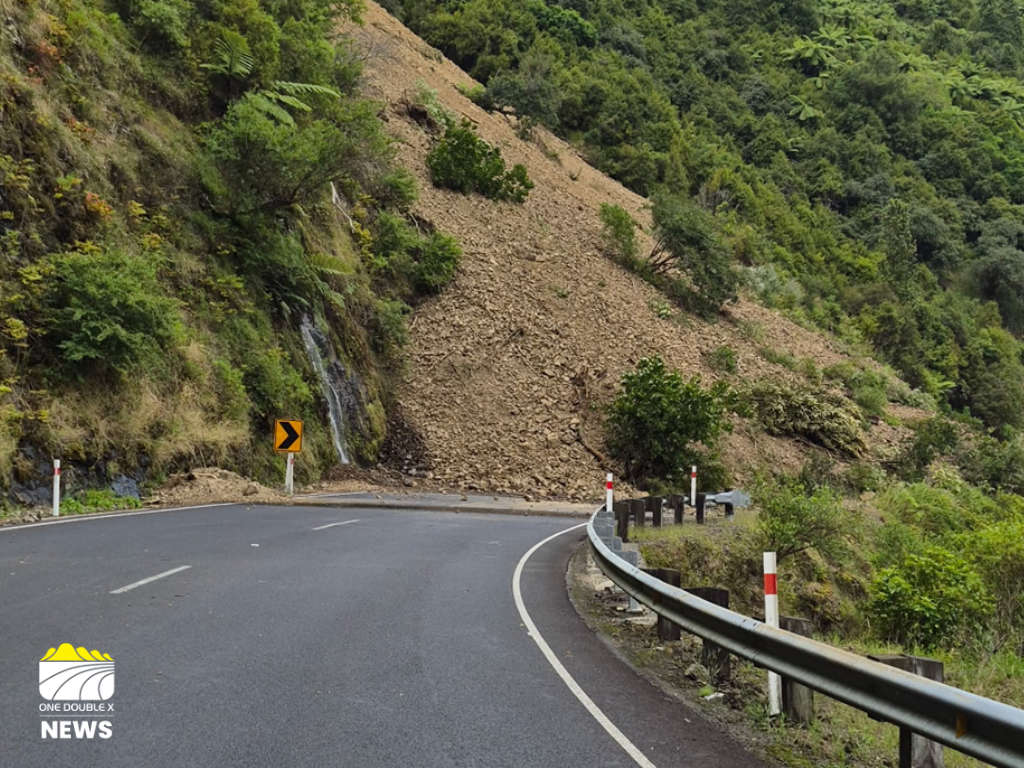
A newly released business case from 2024 revealed NZTA chose to implement a cheaper but less effective option for work through the Waioweka Gorge.
The case said post-cyclone recovery efforts completed before 2024 “will not deliver a resilient network,” and further investment in rebuilding was required
The report found ageing infrastructure had struggled to withstand eight extreme weather events between 2022 and 2024, with the Gorge closed an average of 15 days per year.
The case put forward three funding options that would be part of the Transport Rebuild East Coast Alliance (TREC) work, but is subject to funding approval.
TREC was established to rebuild roads impacted by Cyclone Gabrielle in 2023.
The recommended “outcomes-focused” option targets sites likely to cause major disruptions and take weeks or months to repair.
Despite the business case noting that “addressing lower-risk sites is still important to prevent them from deteriorating into higher-risk sites,” the recommended option only fixes the most disruptive locations.
This would involve 58 rebuilding projects at sites prone to slips and underslips, reducing closure events by 53%.
A more comprehensive option fixing all 83 sites — reducing closure events by 70% — was not chosen.
Fixing all 83 sites would reduce closures by 88% and provide 66% lower freight costs during closures.
The recommended option would reduce closures by 83% and provide 50% lower freight costs.
In the recommended option, twenty-five sites considered lower risk and less disruptive if damaged would need to be addressed in a separate, unfunded phase of work.
The total cost was estimated to be between $130 million to $153 million.
The plan addressing all sites was estimated to cost $36 million to $43 million more.
The case also warned the recommended option plan could be affected if new sites develop, stating there is “potential these sites will deteriorate further and reduce the long-term resilience outcomes of the TREC investment.”
Work would be split into two stages.
The first was expected to take place from 2024 to 2027 and included corridor widening at the sites considered most disruptive if closed.
Thirty-two sites would require work during this stage, including Balls Bluff Slip, Sandy Slip and Te Ti Rockfall and Under Slip Cluster.
The next stage would involve work on twenty-six locations and was planned to take place between 2026 and 2029.
This would include investment in preventing slips above or below the road at sites considered slightly less disruptive if damaged.
Sites in this stage include Otutakeo Rockfall, Okuhuata Rock Scarp and the Goldsmiths North Cluster.
The case suggested projects at sites that could have moderate to minimal damage would be completed after 2029 and would be separately funded.
This work would include twenty-five locations and cost nearly $37 million.
The report said the Gorge was crucial to the East Coast economy, contributing about $12 billion to GDP each year.
The economic cost when the road is closed was estimated at $8 million per day.
The importance of the route was highlighted earlier this year when the Gorge was closed for three weeks following the January weather event before reopening under convoy conditions.
An NZTA spokesperson said operational and resilience focused work to address weather work had been completed shortly before January 16.
"Recovery and maintenance work was already underway at five sites within the gorge as part of Emergency Works Recovery following damage caused by earlier weather events. Once two-lane access into the Gorge can be safely restored, work at these sites will continue."
The spokesperson said, this work can help mitigate but not fully eliminate damage from extreme weather even in areas resilience and mitigation work is in place.
Future investment in the corridor is subject to funding approval.
NZTA said the road is now in a recovery phase.
NZTA Bay of Plenty Area Manager for Maintenance and Operations Sandra King said work at the largest site, the Goldsmith Slip, is still being cleared up, with geotechnical engineers preparing netting to install once work from a spider digger is complete.
She said work to stabilise other sites uses a range of methods to ensure they withstand future weather events and have longevity.
“You'll see the team building up the stabilisation below the road using really cool methods like hex lock blocks and a whole range of different design methods.”
The business case also identified three major risks for work in the Gorge: rising costs, earthquake hazards from the Koranga Fault Line, and the significance of the area to local iwi and hapū.
 Whakaari White Island Alert Level Raised
 Visible Police Presence in Region as Gang Tangi Travels From Rotorua to Ōpōtiki
 Dance Carnival Returns to Whakatāne, Celebrating Community and Creativity