Whakatāne beverage brand Wai Mānuka is preparing to take another major step into international markets, with US manufacturing due to begin next month and trials planned in Singapore and China.
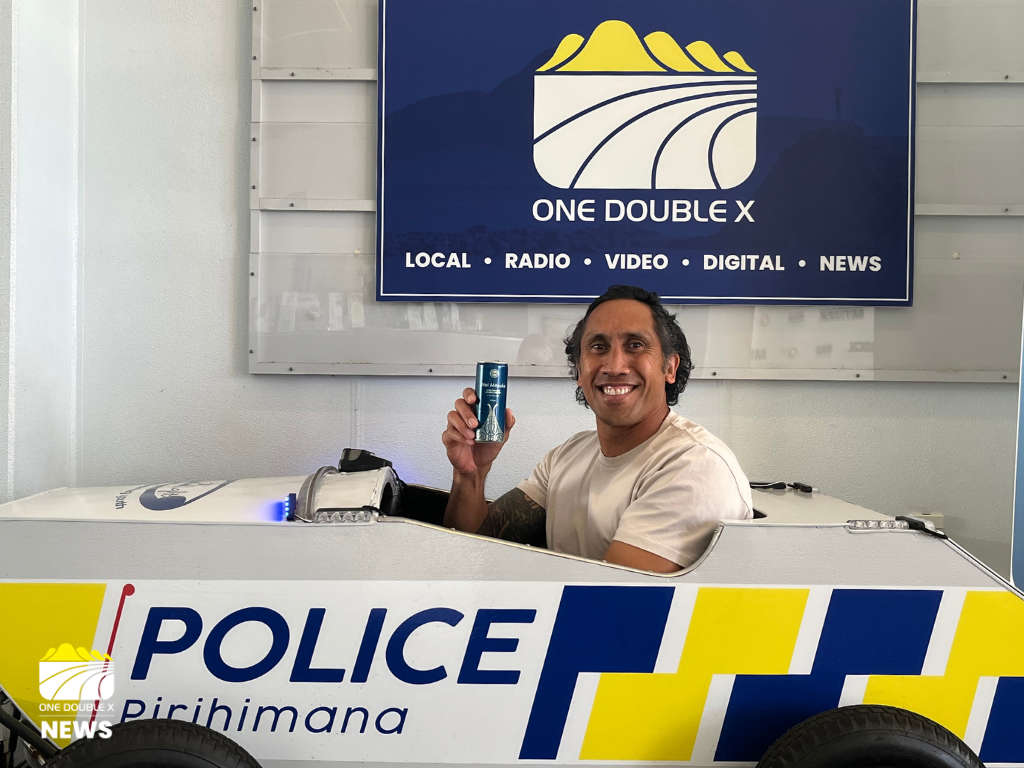
The expansion comes as founder Joe Harawira reflects on nine months of work to establish the company’s US operations, a process he says has involved plenty of challenges along the way.
“I’m surprised I’ve still got hair, and it’s still black for the most part,” Harawira said.
“A lot of sleepless nights because obviously there’s time zone issues, but I think the biggest lesson over the last nine months when we’ve been trying to stand up US operations is recognising that you’re a very small fish in an ocean and just because something is important to you, it might not be important to someone else.”
Harawira said delays and cost overruns across packaging and ingredients had been part of the process.
“Once you realise that and accept it, then you’re fine, but it took me a while to realise that,” he said.
“So yeah, we’ve had delays, we’ve had cost overruns, packaging ingredients across the supply chain, but it’s all part of it, and when you look back on it, there aren’t many Kiwi brands that manufacture in the US, and the reason why is because it’s incredibly tough, it’s expensive, and it takes a lot of time.”
The company is now targeting US manufacturing next month.
“Hopefully when we get there, which is next month, it’ll be another milestone achievement,” Harawira said.
Wai Mānuka is also a finalist for Emerging Exporter to the US, an award run by the American Chamber of Commerce New Zealand.
For Harawira, the recognition provides an opportunity to stop and reflect on how far the business has come.
“I think the biggest thing is around the recognition and the opportunity to really just pause and to sort of celebrate where you are and to look back on and be thankful and grateful for the position that we’re in.”
“Because, you know, as a founder, there’s literally no days off and you’re just hustling hard, and you don’t really, there’s not really a lot of time to stop and sort of reflect.”
International expansion isn't simply about putting the product into new markets.
Harawira believes Wai Mānuka’s connection to New Zealand is central to its appeal.
“To put it simply, I think that Wai Mānuka sort of carries the essence of Aotearoa, so wherever it’s consumed, whether it be New York or Tokyo or Singapore very shortly, customers there feel like they’re emotionally connected to New Zealand.”
He said the combination of ingredients, provenance and culture helped give the brand a distinctive identity.
“And there’s not a lot of brands that can actually sort of combine quality ingredients and a strong narrative that’s grounded in provenance and culture, and I feel like Wai Mānuka sort of does that in an authentic way.”
Harawira said New Zealand already had a strong emotional connection with people around the world.
“I think the easiest way to describe it is that generally most people around the world have a fondness for New Zealand, whether they’ve been here or not.”
“It’s from the movies that they’ve seen, the people that have come out of New Zealand, the haka that they see from the All Blacks, all of that, people tend to feel a connection to New Zealand in some way, shape or form.”
That connection, he said, was something Wai Mānuka could build on.
“So when they experience Wai Mānuka, and they hear sort of the narrative behind it, then straight away that creates that sort of emotional connection that brands are trying to create all the time with their consumer base.”
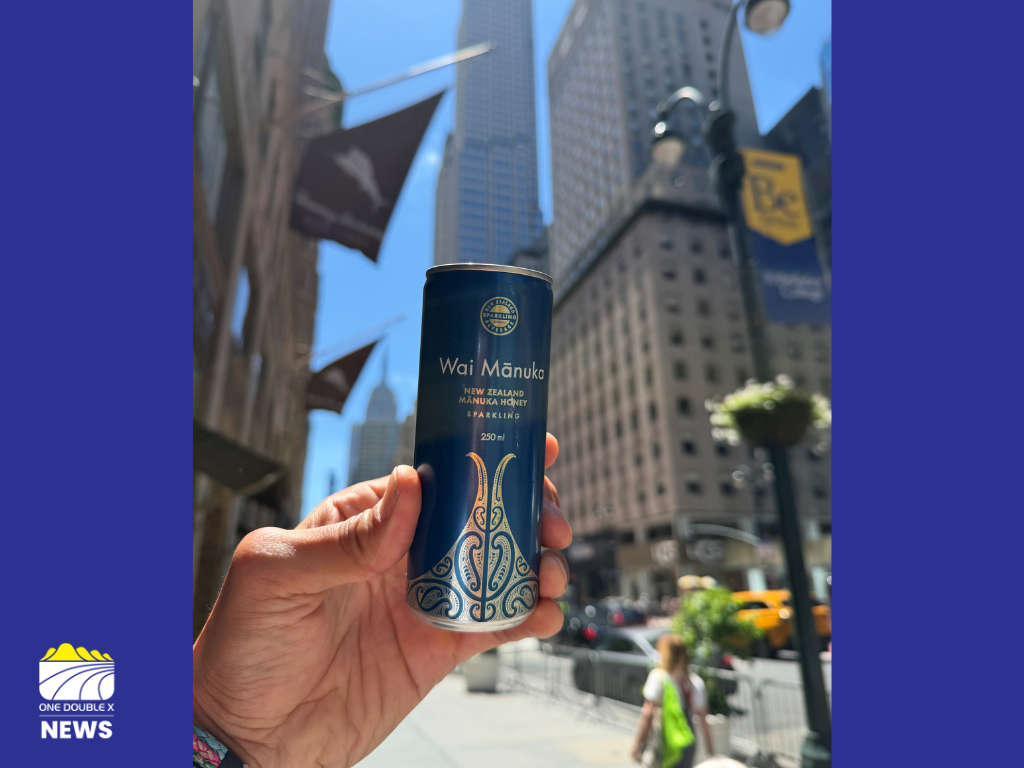 With the product taking off in the United States, Harawira is exploring further opportunities overseas in Singapore and China. IMAGE // Wai Mānuka
The company is also looking beyond the US, with trials planned in Singapore and China.
In China, Wai Mānuka will test live-streaming commerce, an approach Harawira said was new to him but could offer a way to reach consumers without traditional retail channels.
“It’ll be completely new to a lot of Kiwis as well, but basically it’s a low-barrier entry to market to get in front of consumers without having to include a middleman.”
The company’s Chinese partners are targeting what Harawira describes as yoga mums and fitness mums, who are increasingly buying through content creators rather than physical stores.
“So you’re no longer in physical stores, and apparently my partners in China, for the consumers that we’re targeting, which are specifically yoga mums, fitness mums, they’re not buying from retail stores, they’re no longer going into physical outlets to shop, they’re buying based on what content creators are sharing.”
The trial will give Wai Mānuka a chance to assess whether the approach can open up a longer-term pathway into the Chinese market.
“So it’d be really great to understand if there’s a preference for Wai Mānuka, what that looks like in terms of our growth path into China, and whether or not we can expand into other channels off the back of that.”
While the company is looking offshore, it is also developing its product range in New Zealand.
Wai Mānuka is preparing to launch a second product featuring golden kiwifruit.
“We’re starting a Wai Mānuka whānau of products, and the second SKU is essentially the Wai Mānuka core ingredients, but we’ve added golden kiwi fruit to it.”
Harawira said the team had been anxious about whether the new product would live up to the original, but early feedback had been positive.
“We knew that whatever product we created had to at least be on par with or better than the original, and after sharing it with some key people in New Zealand and my US partners, the feedback is actually better, so can’t wait.”
The product is planned for launch in New Zealand in February.
Developing the drink also presented a technical challenge, with the kiwi fruit needing to be processed to achieve the right consistency.
“If we had just used standard kiwi fruit juice, it would have looked like a juice, but it’s got to look at home in a flute glass, so it’s got to be very fine and micro-filtered.”
Harawira is already thinking about a third product, with a horopito-infused drink in the pipeline.
“The key is to have each product sort of very different but still connected to the previous product, so we figure the third is going to be like a horopito-infused, and we’ll call it spice.”
“Again, between the spice, the gold, and the original, they’re all very different, but you can still tell that they’re connected.”
Despite the growing list of international and domestic ambitions, Harawira said there was one more immediate goal at the top of his list.
“I’d like to have a full night’s sleep; that’s probably at the top of the list,” he said.
But there is little indication the pace is slowing, with US manufacturing due to start next month and trials planned in Singapore and China; Wai Mānuka is entering a new phase of its growth.
The next challenge will be turning those early international opportunities into lasting markets, without losing the Aotearoa identity that Harawira believes sets the brand apart.
 Te Tāhuhu o Te Rangi Invites Local Residents to Celebrate Te Wiki o te Reo Māori
 Trust Horizon Bill Passes Parliament, Opening Door to Wider Charitable Funding
 Whakatāne Teen Takes Another Step Towards His Dream of a Music Career