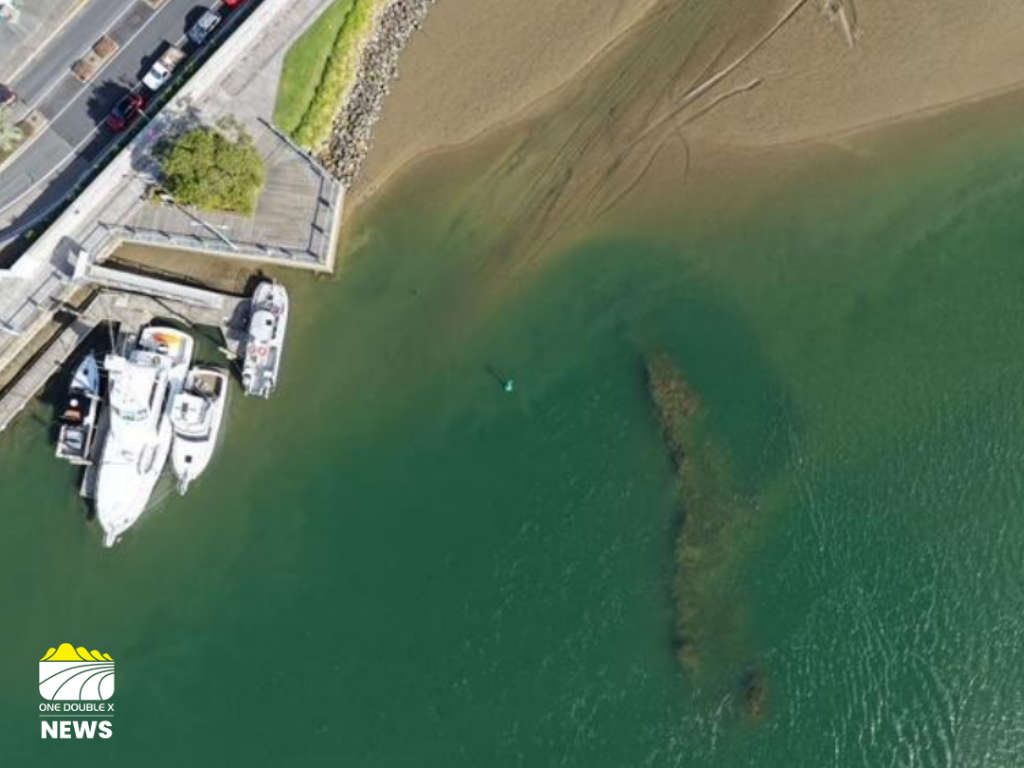
The future of the Whakatāne Yacht Club marina is uncertain after councillors voted to reject a $50,000 funding offer towards dredging a silted navigation channel, a decision the club says threatens the facility's survival.
Council staff estimated the dredging would cost about $368,380 initially, with ongoing maintenance costs of approximately $85,000 a year.
Marina manager Barry Cutfield said the decision could have serious consequences for the marina's future.
"On the face of it, it's a bit of a death sentence for our facility," he said.
"The fact is that only the council can dredge that navigation channel. That's just the way it is. It's part of the way that the resource consent is set up, and it's the way that their operational plan is set up."
"If they decide not to do it, there's just nothing we can do. It really just consigns our marina facility to failure, really, because we can't access the area and we can't maintain the facility."
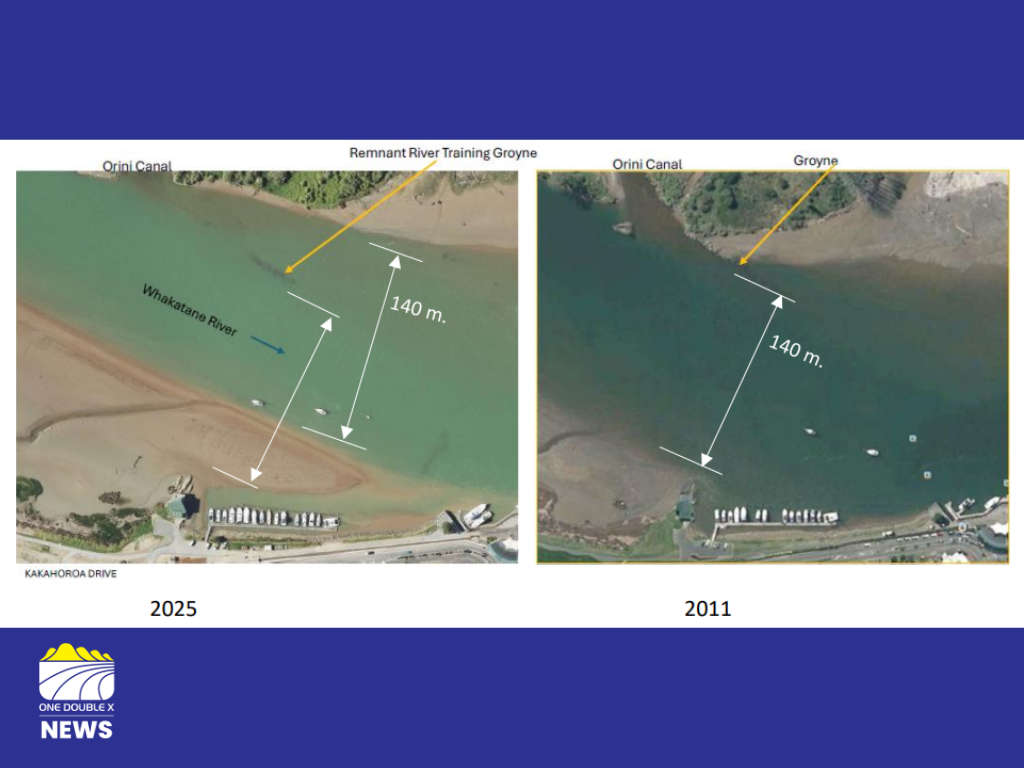
Northward migration of Whakatāne river channel, and formation of silt bank, in 14 years. IMAGE // Whakatāne Yacht Club
The dispute centres on the dredging of the navigation channel between Otuawhaki Wharf and the Yacht Club.
The marina says sediment build-up has made the channel increasingly difficult to navigate and has restricted access for vessels and maintenance equipment.
"We've really been stymied for some three years now," Cutfield said.
"Pretty grim outlook, which is really sad for the town and sad for the harbour."
The Whakatāne District Council report presented to councillors said the Yacht Club had offered to contribute $50,000 towards dredging costs, but only if the work achieved a specified channel depth and width.
As outlined in the club's submission, the offer was conditional on the successful completion of dredging work and would be a one-off contribution.
Cutfield said linking the payment to a specific outcome was important.
"We've got to be very careful with our money, so we thought it was very important to link our offer to an outcome."
"Our offer is simply contingent upon the work achieving depth that we can navigate through."
Council staff recommended rejecting the offer and instead inviting the Yacht Club to submit a proposal through the Long-Term Plan process.
The report stated that while the council holds consent to dredge the navigation channel, "this consent is not an obligation to carry out such works".
Staff also argued that funding the work would require either increased rates, contingency funding, or additional harbour debt.
The report noted that total port and harbour operational costs were about $2.5 million annually, with user charges covering only 11.7% of the costs and the remaining $2.2 million funded by rates.
Council staff further argued it would be difficult to justify funding a project benefiting what they described as a private facility with 18 berths without considering it alongside other community funding requests.
Cutfield disputed suggestions that funding was unavailable.
"Despite what they've been saying in public, they're claiming that they are in a deficit situation in their port operational budget for the last few years," he said.
"But the reality is that they're not. They're actually, in the last reported financial year, they are $300,000 in surplus on that account."
"I think the funding is there to do it, but apparently the will is not."
The Yacht Club's submission argued council had historically funded dredging in the area and said the Ports Operational Plan required council to provide and maintain a navigable channel to the facility.
The submission also claimed the council's failure to maintain river training groynes on the northern bank of the river had contributed to sediment build-up and channel instability.
"There are groynes there that have been there historically, and it's the council's responsibility to see that they're maintained, and they simply haven't," Cutfield said.
"The groynes have been lost through neglect, really, and they've lost their effectiveness, and the channel is no longer stable."
The Yacht Club has proposed a longer-term solution involving an expansion of the marina and construction of a closing seawall, which Cutfield said would reduce the council's future dredging responsibilities.
"We're very keen to proceed with a project we've had on the books for a little while now to enlarge our marina and provide a closing seawall," he said.
"We'd like the council to undertake this dredging so that we can continue to operate until we get our facility, the new work completed."
Council staff said they were also trialling vessel-mounted pump dredging in parts of the channel and believed it could prove more cost-effective than traditional dredging methods.
However, the report noted the Yacht Club did not support alternative dredging approaches.
The proposal was ultimately rejected by councillors in a narrow vote.
Despite the setback, Cutfield said he remained hopeful a solution could still be found.
"There were four councillors who sort of grasped some of what we were saying," he said.
"I don't think it's totally over."
"I'd love to think we could co-operate with the council and move this forward and get to the point where we've got a more sustainable maintenance arrangement."
For now, the marina plans to focus on work it can control, including dredging within its own facility later this year.
"We're planning to dredge our own facility toward the end of the year," Cutfield said.
"We've got to work to achieve that, but the process of achieving that is just so much harder without that access up the river for the plant that we need to use."
Despite the criticism from the Yacht Club, Mayor Nándor Tánczos said the council’s position was driven by financial constraints and concerns about ongoing costs being passed on to ratepayers.
He said while dredging beyond Ōtuawhaki Wharf primarily benefits the marina, any funding through rates would place further pressure on already stretched community finances.
 Police Crack Down on New Gang Chapters in Ōpōtiki
 Under the House to the Try Line: Ruby and Her 11 Pups Seek Forever Homes
 Eastern Bay Local Government Future Left in Limbo After Head Start Decision Delayed
 Hillcrest Road Closures Scheduled for Friday