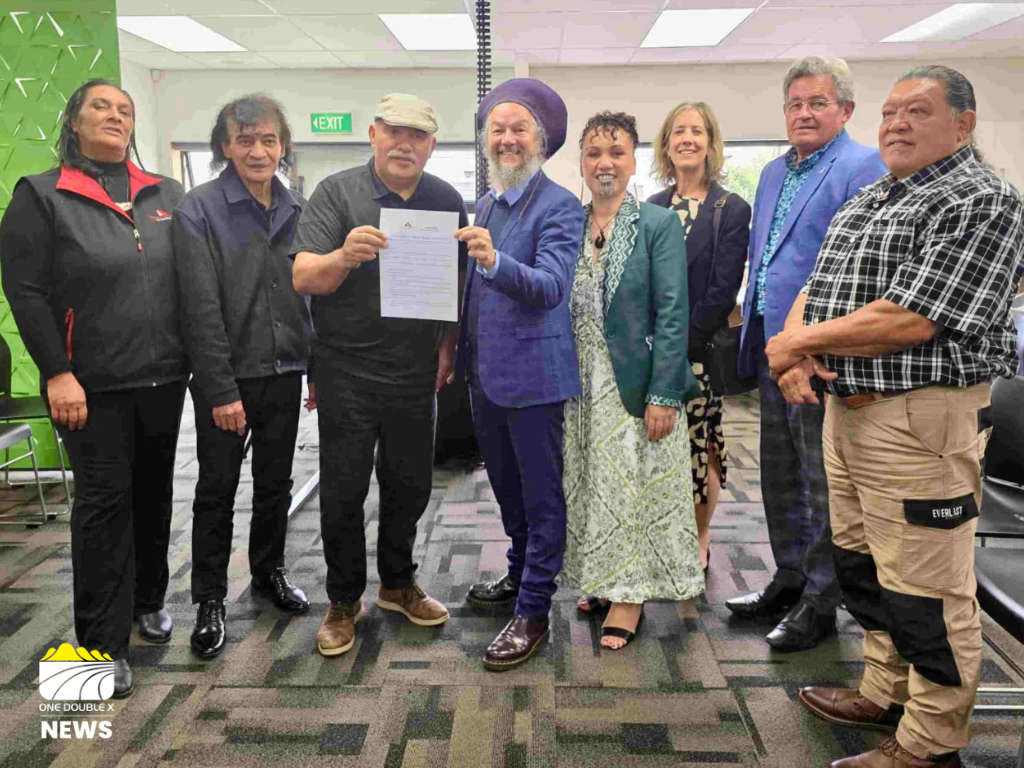
Whakatāne Mayor Nándor Tánczos has labelled the Government’s decision to scrap all Mana Whakahono ā Rohe agreements “destructive and irresponsible”, saying it undermines years of work building constructive relationships between councils and tangata whenua.
The Government announced last week that all existing and initiated Mana Whakahono ā Rohe agreements will be removed as part of its Resource Management Act reforms, despite previously indicating agreements already underway would continue under a transition process.
Tánczos said councils and iwi had acted in good faith after the Government initially set a deadline allowing existing applications to proceed while preventing any new agreements.
“What the Government told everyone was that there would be no new Mana Whakahono ā Rohe agreements after a cutoff date, but applications already made would continue,” he said.
“Councils and tangata whenua value these agreements, so people worked hard to get applications in before that deadline. Now the Government has announced they’re scrapping the whole thing, even agreements that have already been signed. That’s deeply disappointing.”
The agreements, introduced under the Resource Management Act in 2017, are designed to help local authorities and tangata whenua agree on how they will work together on resource management issues and environmental decision-making.
Tánczos said there had been widespread misunderstanding about what the agreements actually do.
“I’ve been looking at the comments on social media and through national media, and people seem to think these agreements are something they’re not,” he said.
“People are saying only elected councillors should have a say at council. Mana Whakahono ā Rohe agreements do not give unelected people a vote or a voice in council meetings. That’s not what they are.”
Instead, he said, they are high-level relationship agreements that outline how councils and iwi will engage on matters of shared interest.
“They’re simply agreements about how we will work together for good outcomes for our whole community.”
Whakatāne District Council signed its first Mana Whakahono ā Rohe agreement with Te Rūnanga o Ngāti Manawa in November 2025.
At the time, both organisations described the agreement as a significant milestone that formalised their partnership on resource management and environmental care.
The council said the agreement provided clarity around how the two organisations would work together, while Ngāti Manawa said it would strengthen its role as kaitiaki and help protect cultural and environmental values for future generations.
Tánczos pointed to that agreement as an example of what Mana Whakahono ā Rohe arrangements are intended to achieve.
“It’s really just talking about the way we engage together around projects that affect Ngāti Manawa and affect the council,” he said.
“They’re a really positive thing. They’re about saying we want to work together cooperatively rather than fighting in court all the time. They’re asking, ‘How do we cooperate for the good of everyone?’”
He questioned why the Government would remove what he described as a framework for cooperation.
“I don’t understand why any Government would want to get rid of cooperation agreements that simply indicate a positive working relationship,” he said.
“I don’t understand what the Government thinks it’s trying to achieve. I think it’s really destructive and irresponsible.”
Despite the legislative change, Tánczos said Whakatāne District Council remained committed to maintaining strong relationships with tangata whenua across the district.
“We’ll still be looking at maintaining as good a relationship as we can with tangata whenua and with all the different iwi across our district,” he said.
“We don’t want an antagonistic relationship. We want a positive, cooperative relationship, and we’ll continue doing our best to maintain those relationships.”
He acknowledged the council had spent years rebuilding trust with iwi.
“Whakatāne District Council has done some pretty terrible things over time in the past, and we have to own that and do better,” he said.
“That’s what we’ve been trying to do, and that work will continue.”
Without the legislative framework, the council will now investigate other ways of formalising those partnerships.
“It’s helpful to have a clear statement that says this is our intention, these are the outcomes we’re trying to achieve, and this is how we want to work together,” Tánczos said.
“So we’ll be looking at what other mechanisms we can use to do that. But even if we don’t have formal agreements, we’ll still be looking to work as cooperatively together as possible because that’s in the best interests of everyone.”
The Government says the change follows a sharp increase in Mana Whakahono ā Rohe agreements since the new planning legislation was introduced to Parliament.
Resource Management Reform Minister Chris Bishop said only eight agreements existed when the Bills were introduced late last year, but several dozen had since been agreed or initiated.
Rather than allowing those agreements to continue, the Government will instead allow councils to enter into more narrowly defined iwi participation agreements focused specifically on statutory planning processes and Treaty settlement obligations, with what it describes as “clear guardrails” to prevent their scope expanding.
The decision forms part of the Government’s broader overhaul of the Resource Management Act, which it says will simplify planning rules, reduce compliance costs and make it easier to deliver housing, infrastructure and economic development while continuing to protect the environment.
 Te Tāhuhu o Te Rangi Invites Local Residents to Celebrate Te Wiki o te Reo Māori
 Body Located During Search for Missing Man
 SH2 Near Te Puke Golf Course to Close This Weekend for Railway Crossing Repairs
 Volunteers Aid Search for Missing Ōpōtiki Man