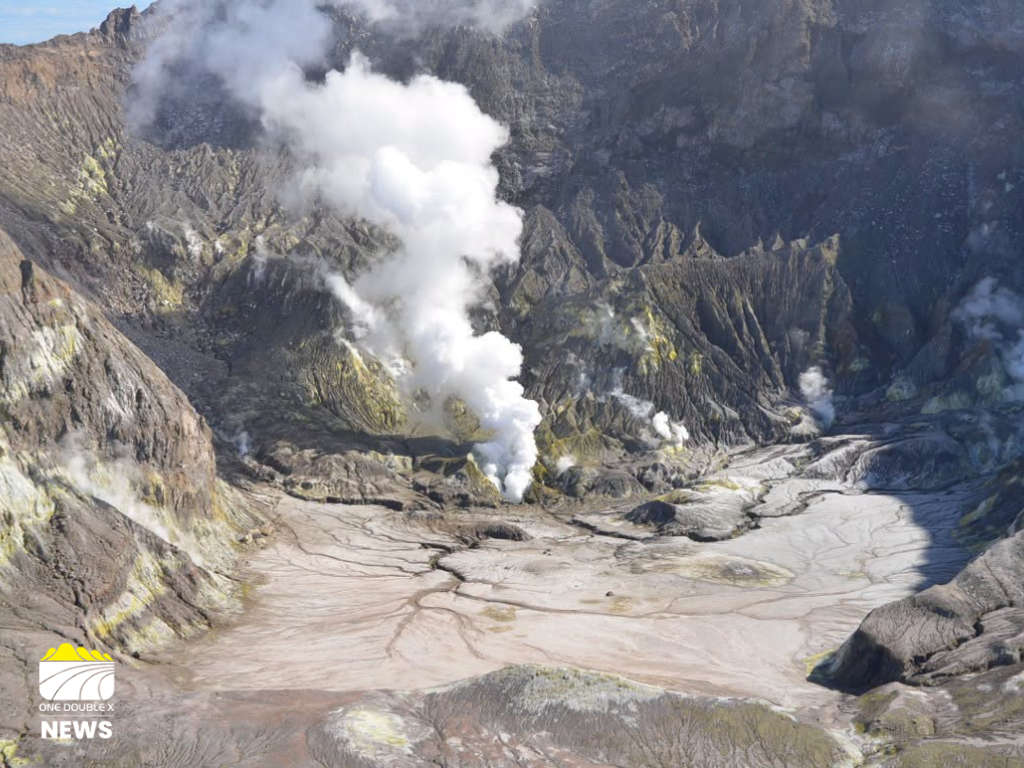
Gas emissions from Whakaari/White Island have continued to decline over the past two months, although the volcanic alert level remains at 2.
Volcanic activity at Whakaari continues to show an overall decline, although the Volcanic Alert Level remains at 2 due to the lack of on-island monitoring.
In its latest Volcanic Activity Bulletin, Earth Sciences New Zealand (ESNZ) said the general decline in gas emissions observed since December 2024 has continued.
No eruptive activity has been observed since March, and the overall level of volcanic activity remains unchanged.
 SO2 and CO2 emission rates measured during gas flight since December 2024. IMAGE // Earth Sciences New Zealand
Between 17 June and 27 August, carbon dioxide emissions fell from about 1,370 tonnes per day to 930 tonnes per day.
Sulphur dioxide emissions also declined significantly, dropping from approximately 530 tonnes per day to 70 tonnes per day.
Despite the decrease in gas emissions, the Volcanic Alert Level remains at Level 2, indicating moderate to heightened volcanic unrest.
The Aviation Colour Code also remains at Yellow.
Low to moderate steam emissions continue from the active vent, but ESNZ said there has been no evidence of ash emissions from Whakaari over the past two months.
There has also been no crater lake in the active crater since late June 2024.
ESNZ said gas emissions have fluctuated between measurement flights but continue to show an overall downward trend.
However, monitoring the volcano remains challenging because there are currently no sensors operating on the island.
Scientists are instead relying on remote cameras, satellite imagery, and periodic gas and observation flights to monitor changes in activity.
While these observations indicate a generally low level of volcanic activity, ESNZ said it cannot distinguish between Volcanic Alert Level 1 and Level 2 without monitoring equipment operating on the island.
As a result, the alert level will remain at Level 2 until on-island monitoring can be reinstated.
ESNZ cautioned that volcanic eruptions could still occur with little to no warning.
Any future eruption could affect the crater floor and the immediate vicinity of the island, although ashfall affecting the mainland remains unlikely.
The Earth Sciences New Zealand Volcano Monitoring Group and the National Geohazards Monitoring Centre continue to closely monitor Whakaari/White Island for any changes in volcanic activity.
The latest bulletin follows ESNZ's previous update on June 23, when the Volcanic Alert Level remained at Level 2, and the Aviation Colour Code remained at Yellow.
 Rūātoki Water Treatment Plant Project Takes Next Step Towards Long-Term Solution
 Trust Horizon Bill Passes Parliament, Opening Door to Wider Charitable Funding
 Police Urge Public to Come Forward With Information Following Fatal Crash in Te Puke
 Health Warning for Lower Whakatāne River Has Been Lifted