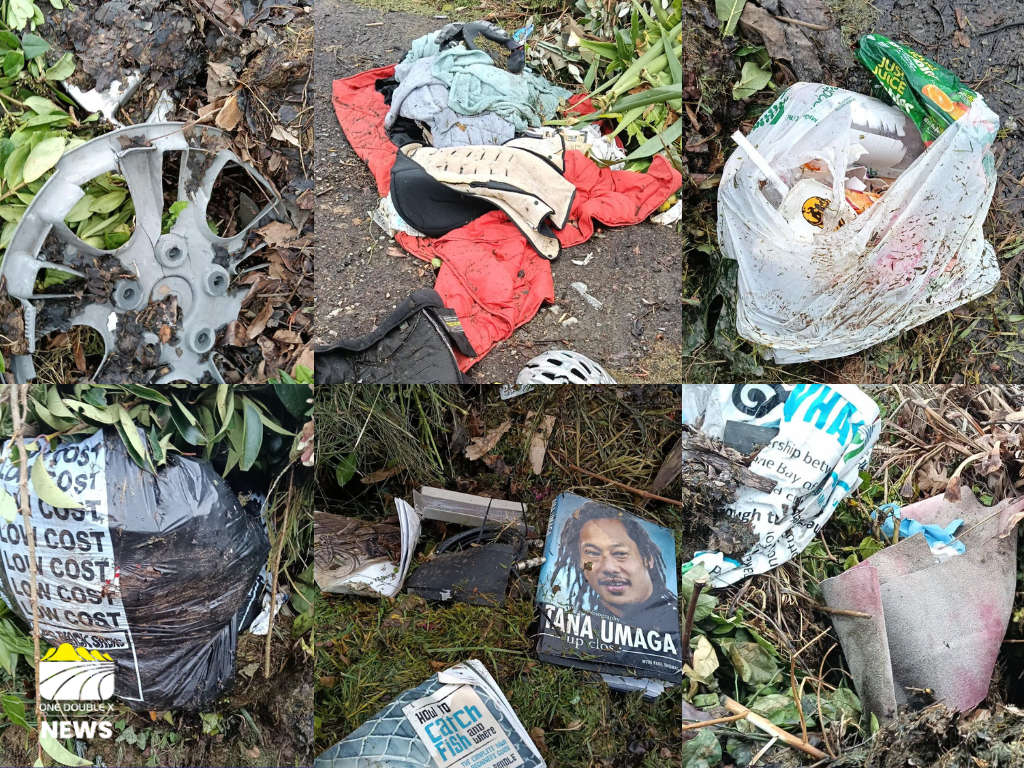
Wakatāne District Council is reminding residents to think carefully about which bin they use after a number of unsuitable items were recently found in green waste collections.
Among the items discovered were a book, a bike helmet, nappies and full rubbish bags.
Waste and Resource Recovery Manager Lisa Eve said contamination of green waste and recycling bins remains a recurring issue despite ongoing efforts to educate the community.
"It is really disappointing because we put a lot of effort into trying to educate people on what materials they should be putting in each bin and yet we still keep having problems like this," she said.
Once kerbside collections are picked up, the material is taken to the council's preprocessing facility.
Green waste is chipped before being turned into compost, but Eve said contaminated loads have to be sorted by hand before they can be processed.
"We're actually having to sort through every bit to take the rubbish out before it can be shredded because you can imagine what would happen if we shredded the green waste while it's still got all of that rubbish in it."
The extra sorting adds both time and cost to the process.
"I know that we're all very sensitive to cost increases at the moment so it's really something that we would rather avoid doing," Eve said.
"Every time we have to go through material again to take out rubbish from the green waste, or in respect of the recycling that gets picked up at the kerbside that actually gets sorted by people by hand, that does have a cost impact for us because it means that we're essentially handling the material again as opposed to just getting it straight into the recycling process."
Eve said the council would prefer residents to take a moment to think about what belongs in each bin.
"We would just rather that people really focus on thinking about what items they should be putting into each bin and recycle the right things, then we can make sure that our services are being used as efficiently as possible."
She said contamination also has environmental consequences.
If rubbish is not removed from green waste before chipping, contaminants can end up in the finished compost, making it unsuitable for sale.
Contaminated recycling loads can also result in recyclable material being sent to landfill.
"Sometimes if we pick up a load of recycling and there's just too much rubbish in it, then there is a chance that it could end up going to landfill instead of actually being recycled, and the same applies to a load of green waste if there's too much rubbish in it."
Eve encouraged residents to check the information provided by the council, including guidance on its website and Facebook page, to ensure they are putting the right items in the right bins.
She also reminded the community that kerbside collections are not the only disposal option.
The Whakatāne and Murupara Resource Recovery Centres accept a range of items, including concrete, batteries and tyres, with many services available free or at low cost.
Residents are also encouraged to donate reusable items to charity shops or the CReW Reuse Centre, recycle whiteware and scrap metal through local scrap yards, or offer unwanted items through community social media pages so they can be given a second life.
 Police Crack Down on New Gang Chapters in Ōpōtiki
 Under the House to the Try Line: Ruby and Her 11 Pups Seek Forever Homes
 Eastern Bay Local Government Future Left in Limbo After Head Start Decision Delayed
 Hillcrest Road Closures Scheduled for Friday