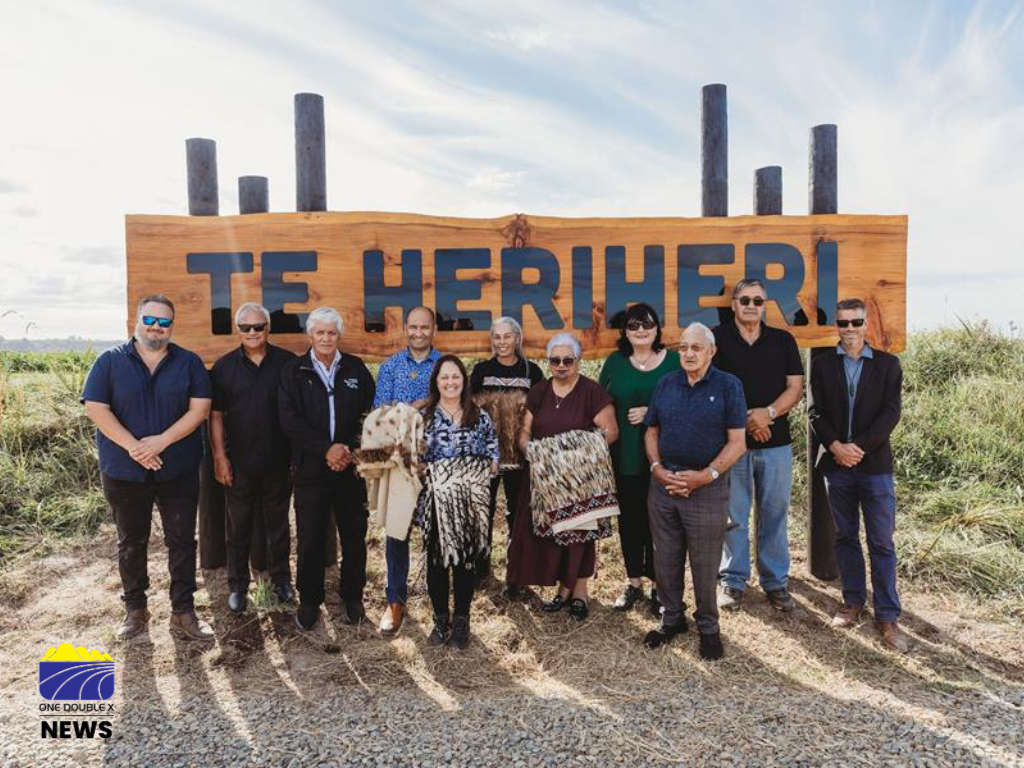
Water once again flows through Te Heriheri Wetland near Pukehina, marking a major restoration milestone for the Waihī Estuary.
Once used as farmland for decades, the wetland—previously known as the Cutwater Road Wetland—has now been restored to a more natural state. Eighteen months of construction made this transformation possible.
At a commissioning ceremony on Friday, project partners from Te Wahapū o Waihī and Toi Moana Bay of Plenty Regional Council joined iwi leaders, community members and government representatives to mark the occasion.
Te Heriheri is the original name of the site, which was once used as a seasonal settlement by Ngāti Whakahemo for gathering food and natural resources.
Independent chair of Te Wahapū o Waihī, Te Taru White, said the project showed what could be achieved through collaboration.
“All of us standing here together highlights what you can achieve through collective action,” he said.
“It’s never easy to unite different groups, but when we all hold the same values of cleaning up the environment, kaitiakitanga, manaakitanga, protecting what matters – that’s when the magic happens.”
Project lead Kura Paul-Burke said each stage of the restoration contributed to long-term resilience.
“Every plant, every kōrero, every plan and every hectare restored is another stitch in this protective cloak – grounded in tikanga, designed for resilience, and made to last,” she said.
Regional Council Chair Matemoana McDonald said the project reflected the strength of partnerships between iwi, councils, and communities.
“This restoration is so much more than an environmental project – it reflects what we can achieve when we work in genuine partnership.”
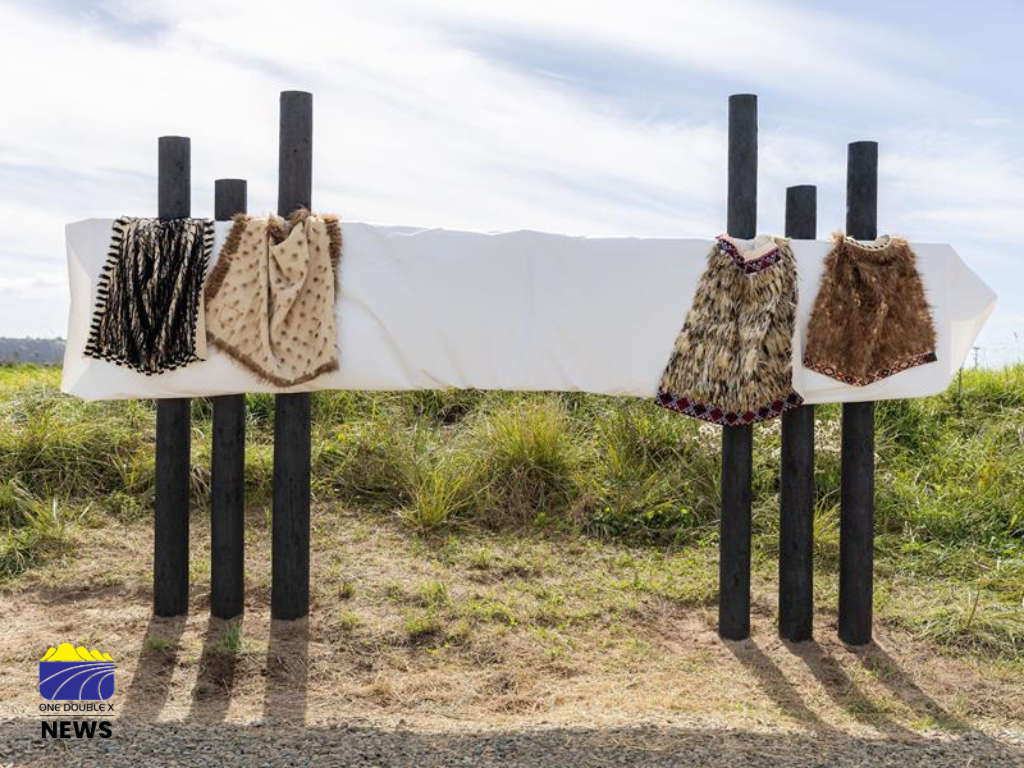
Wetland signage cloaked in korowai. IMAGE: Bay of Plenty Regional Council
The restored wetland sits between the Pongakawa River and the Pukehina Canal, on the edge of the Waihī Estuary. It is designed to help filter agricultural runoff from surrounding dairy farms, improving water quality and supporting native habitats.
The project is part of a wider effort to restore the estuary, which has been identified as one of the country’s most degraded wetlands due to decades of drainage, land use changes, and pollution across its 35,000-hectare catchment.
In 2023, 109 hectares of land on Cutwater Road were purchased for the project. Of that, 30 hectares have been converted into a wetland, including a 27-hectare coastal treatment wetland and a three-hectare tidal wetland.
Funding was split evenly between the regional council and Te Wahapū o Waihī, with support from the Ministry for the Environment’s Freshwater Improvement Fund.
The wetland is one of several projects underway aimed at restoring the ecological health and mauri of the Waihī Estuary.
 Te Tāhuhu o Te Rangi Invites Local Residents to Celebrate Te Wiki o te Reo Māori
 Trust Horizon Bill Passes Parliament, Opening Door to Wider Charitable Funding
 Whakatāne Teen Takes Another Step Towards His Dream of a Music Career