Planning for the future of Rūātoki’s drinking water supply is moving forward, with Whakatāne District Council progressing investigations and design work for a potential replacement water treatment plant.
The project is aimed at improving the resilience of the community’s water supply, particularly during heavy rainfall when high levels of sediment and turbidity enter the water system.
Whakatāne District Council has allocated around $1.78 million to the project, which will fund the design, investigations and work needed to determine the most appropriate long-term solution.
Manager Water and Wastewater Treatment, Three Waters, Neil Yeates said the existing supply was particularly vulnerable during significant rainfall events.
“At the moment we've been working on better resilience for the drinking water supply to the Rūātoki community, particularly in the rain events where we have high turbidity coming down the river, high mud levels,” he said.
“We are really struggling with the solids that are coming down through the infiltration gallery.”
The current Rūātoki water supply draws water from a bore near the Ōhinemataroa River.
Over time, the river has shifted across the wide river plain and moved closer to the bore, increasing the influence river water can have on the source during heavy rain.
Yeates said the changing river path had created significant challenges for the existing supply.
“The river itself has slowly been chewing into the sub-basin, moving itself further and further towards the west, which is coming closer and closer to our bore that we put in many years ago,” he said.
“During a high rain event, [the water] actually flows around the bore site itself.”
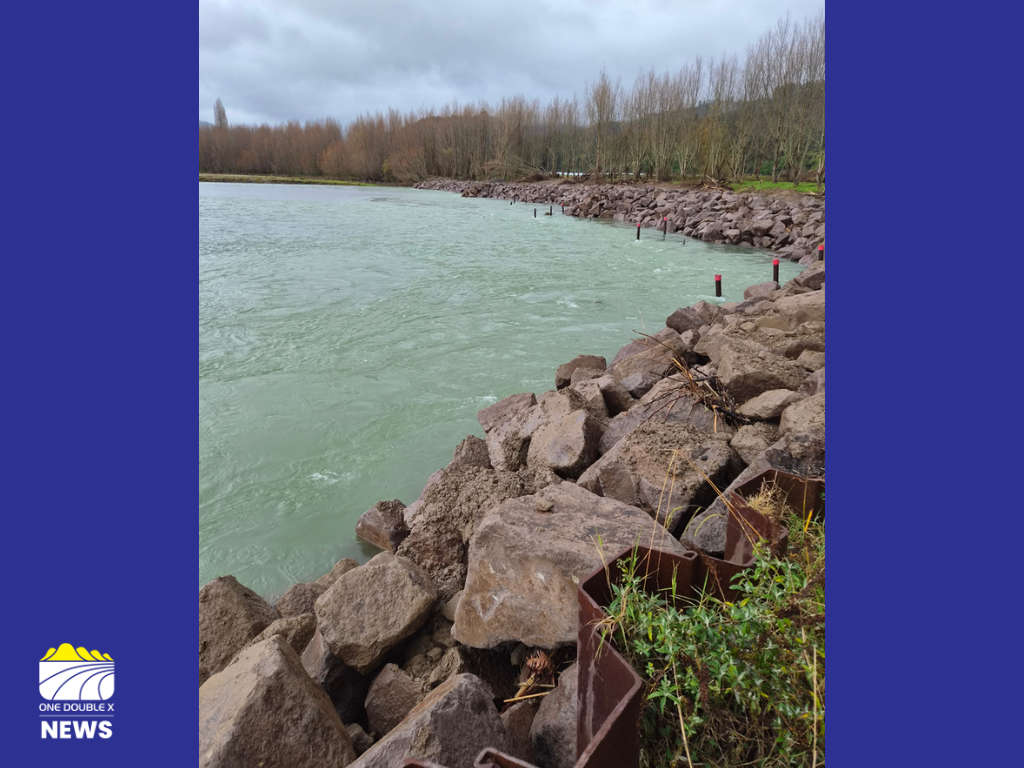
Council has used sheet piling and large rocks to help protect the bore area, while also working with Toi Moana Bay of Plenty Regional Council and iwi on options to influence the river’s pathway.
The Council has also investigated more than seven alternative bore locations, but investigations have identified the existing bore as the preferred option for further planning and design work.
Yeates said the focus had now shifted towards finding a treatment solution that could cope with the conditions at the existing site.
Council has been trialling membrane and micro-filtration technology to determine whether it can remove the fine particles responsible for cloudiness in the water.
Yeates said initial trials had highlighted some of the difficulties involved.
“We've been taking samples out and running a micro-filtration unit to try and see if we can reduce the cloudiness of the water,” he said.
“But we're finding that there's more and more, as the level drops down slowly, it's actually harder to filter that very fine material out.”
As a result, Council is now looking at more modern treatment technology that could provide a more reliable solution.
“We're not actually winning with that process, and we're going into a different type of more modern technology to try and get us over the line,” Yeates said.
Council Transition Director, Three Waters, Nic Johansson said the trials had nevertheless provided greater confidence that advanced treatment technologies could improve the reliability of the supply.
“The trials have given us greater confidence that advanced treatment technologies have the potential to improve the reliability of the supply,” he said.
“However, there is still important work to do before any decisions are made on the future water source and final treatment approach.”
The project has now moved into a more detailed design and planning phase.
Yeates said Council had already undertaken work including water storage investigations, treatment trials and geotechnical investigations.
“We've now sort of moved on to more of a design and planning phase, where the technical design team can come up with different types of options that we can use to try and fix the problem,” he said.
Council has also secured land through a lease arrangement for a potential new treatment plant.
However, Yeates said there was still significant work to be completed before construction could begin.
The project will require further technical trials, site investigations, archaeological assessments and statutory approvals, as well as consultation with iwi and consideration of how the site and treatment process will operate.
Yeates said the Council was also focused on finding a solution that was both effective and affordable to operate over the long term.
“It's a little bit tricky because we're still trying to work through all the different problems we're having and work out the best solution for the community, but also the most cost-effective solution for the community,” he said.
“We could build a Rolls-Royce plant out there, and it would cost Rolls-Royce to keep it running.”
He said the design process was about finding the right balance between technology, reliability and ongoing costs.
“The more technology we can throw at it right at the moment while we're in the design phase to try and bring it down to nuts and bolts, that is a long timeframe that we need to work through to develop it all and get it where we want it to be.”
There is currently no confirmed date for construction or completion of a new treatment plant.
Yeates said Council needed to work through the technical options and consultation process before it could establish a firm timeline.
“We just have to work through all these little tick boxes first, get it where we need it to be, and then we can start putting it out to the community, put it out to different companies for design and build,” he said.
“We are making progress. It's not visible progress at the moment for a lot of the community. We just need to make sure that we've got everything ticked off and have it worked out where we want it to be.”
In the meantime, rock riprap works have been completed around the existing bore, with support from Toi Moana Bay of Plenty Regional Council.
The works are designed to protect the bore from further river movement and flooding while longer-term options are developed.
The timing of any future construction will depend on the outcome of the investigations and approvals, including Māori Land Court approval of lease arrangements.
Te Uru Taumatua Chief Executive Kirsti Luke said the project was part of a wider resilience focus for Tūhoe and reflected years of work between Council, Rūātoki tribal and hapū representatives and whānau landowners.
“The Council team, Rūātoki Tribal and hapū whānau landowners have spent years working through complex issues — from mineral chemistry and land access, to river movement, flood braiding, gravel build-up and the search for suitable sites,” she said.
“It may look as though the work begins when the first spade hits the ground, but in this case the hardest part is now done, which has involved finding a supported source of wai — both in terms of water access and responsibility to the awa system.”
Johansson said the work underway was an important step towards providing a more reliable long-term water supply for Rūātoki.
“We know boil water notices are frustrating for those in Rūātoki and can create uncertainty for whānau,” he said.
“While there is still a considerable amount of mahi ahead, we're pleased to reach the point where we can begin the investigations, assessments and engagement needed to shape the future of the Rūātoki water supply.”
 Voting Open for Eastern Bay General Constituency By-Election
 Councils Consider Next Steps After Eight-Month Water Services Investigation