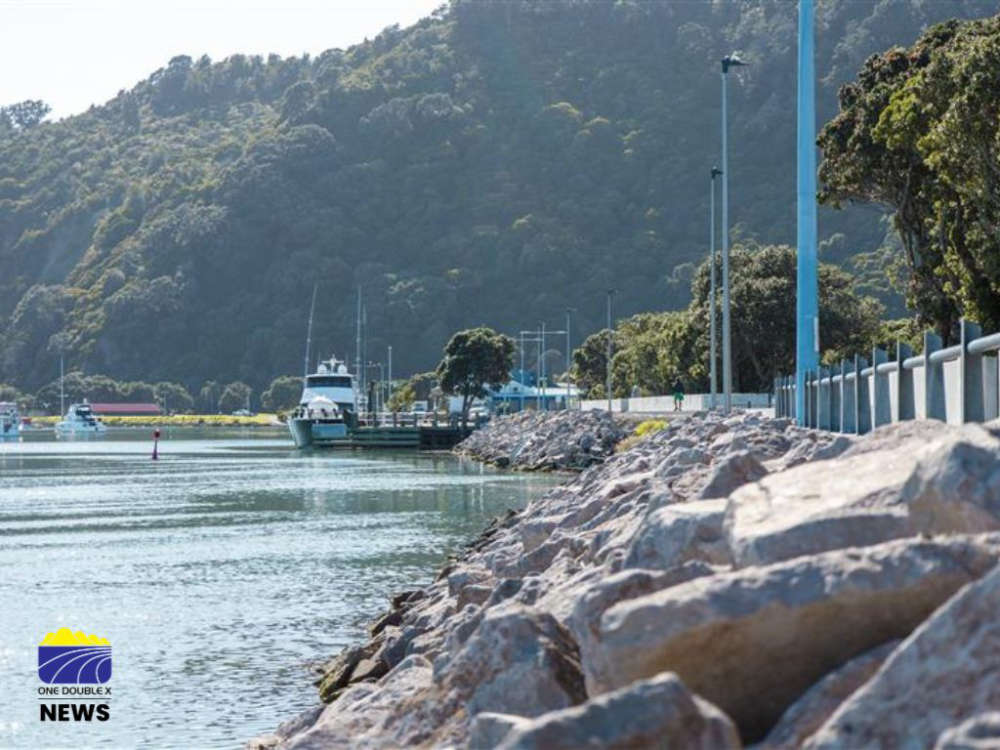
Work to remove the council-owned buildings on the corner of The Strand and Quay Street will begin soon as part of the wider Whakatāne Riverfront Enhancement Project.
The riverfront enhancement work is supported by $3.75 million from central government, matched dollar-for-dollar by the Council through its 2024–2034 Long Term Plan budget.
Buildings at 58, 60 and 62 The Strand, and 31 and 33 Quay Street, were purchased by the Whakatāne District Council with the intention of clearing the site for future redevelopment.
The Council said the buildings have been deteriorating for some time and are becoming unsafe.
Manager Strategic Property, Vanessa Fergusson, said the Council recognises that the buildings hold strong memories for many people.
"We acknowledge these buildings hold memories for people and are part of the changing story of this area," Fergusson said.
"However, they have been deteriorating for some time, and retaining them would likely require significant investment at a considerable cost to ratepayers."
Work is expected to begin in early July, starting with asbestos removal, followed by full demolition from September, which is expected to take around eight weeks.
A further four weeks will be required for site clean-up.
Fergusson said there are likely to be disruptions for the public during this time, including temporary changes to pedestrian access and construction noise within permitted limits.
"We understand this work may be inconvenient, and we will work closely with contractors to minimise disruption as much as possible while maintaining safe access wherever we can," she said.
Following demolition, the Council said the site will be developed into a temporary public recreation space, in line with enhancement plans consulted on with the community in March.
The temporary space is expected to include picnic tables, areas for food trucks, a half basketball court, lighting, and timber seating.
Fergusson said the Council understands some people may question why money is being spent on a temporary space.
"What we've learned is that when a site sits empty, it can become a target for vandalism and anti-social behaviour, creating ongoing costs for security and clean-up," she said.
"Making the space usable in the interim helps reduce these issues while we continue working through the process of confirming the long-term plans for the site."
The Council said the site is expected to be redeveloped in the future.
In April 2026, Council approved a scaled-back design for the enhancement works, opting for a baseline plan that balances cost pressures with public amenity improvements.
“The approved baseline design represents the minimum scope of work required to integrate the upgraded floodwall along the riverfront while still securing external funding,” said the council .
The decision was made, following public consultation in March on a range of project options.
 Te Tāhuhu o Te Rangi Invites Local Residents to Celebrate Te Wiki o te Reo Māori
 Rūātoki Water Treatment Plant Project Takes Next Step Towards Long-Term Solution
 Voting Open for Eastern Bay General Constituency By-Election