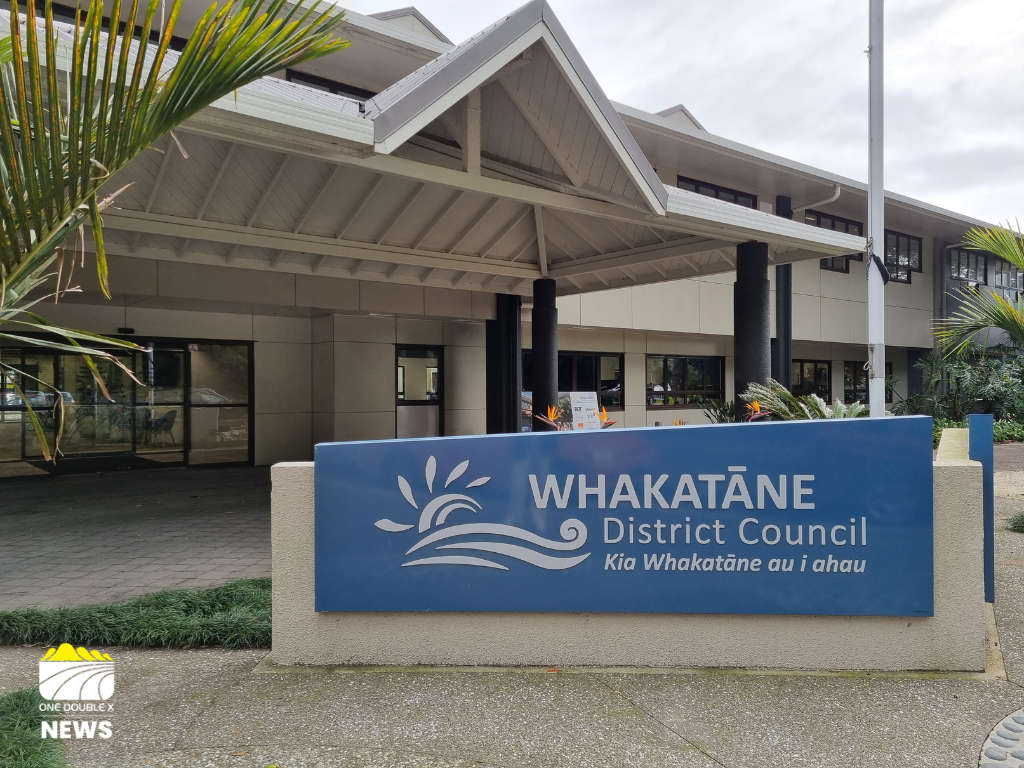
Whakatāne District Council has reduced its proposed average rates increase for the 2026/27 financial year from 9.4% to 9.1%, following a decision to use waste disposal levy funding to offset part of the cost of household kerbside recycling.
The reduction comes after councillors agreed to apply $250,000 of waste disposal levy funding towards the recycling service, reducing the amount that needs to be funded through rates.
Mayor Nándor Tánczos said the original 9.4% increase had already been signalled in the Long Term Plan adopted by the previous council, and staff had worked hard to prevent further increases despite rising costs.
“We’ve been working really hard to try and get on top of that.”
“Costs are increasing. So we’re actually looking at having to increase it beyond that. So we’ve worked really hard to not do that. We don’t want to burden the community more than what we’ve already kind of foreshadowed.”
Council staff reviewed budgets and identified approximately $2.06 million in operational savings, in addition to earlier savings identified in late 2025.
However, councillors decided most of those savings should be used to reduce borrowing rather than immediately lower rates.
Mayor Tánczos said the council’s priority was addressing its operating deficit.
“So since COVID, basically, council has been spending more than it’s been taking in rates, fees, charges, grants, and all our various income,” he said.
"What that means is every year, we’re borrowing money to fund the operating deficit.”
"Now, that’s really unwise financial decision-making. In the past, during COVID, you could understand there was a whole lot of factors going on, but we need to get on top of that, and this council has really committed to getting on top of our operating deficit, because it means locking in rates rises in the future.”
“If we take on debt to pay for operating expenses, it means that those interest costs and paying off the principal is gonna lock in rates rises in the future, and we don’t wanna do that. We’re talking about the long-term financial health of the council and of the community.”
Tánczos said most of the identified savings had been directed towards reducing the deficit and improving the council’s financial position.
“So most of the savings that we’ve made, we’ve put against reducing the operating deficit as a prudent way forward.”
The mayor clarified that the reduction from 9.4% to 9.1% was not a result of those operational savings, but was solely due to changes in how waste disposal levy funding could be used.
“We have managed to reduce the rates a small amount, and it’s to do with how we fund our waste minimisation initiatives,” he said.
"There’s a grant that comes from the government from the Waste Levy Fund, and in the past, that’s been quite ring-fenced about how that could be spent, and council recently made a decision to open the scope of what that money could be spent on to allow it to be spent on some of the kerbside recycling schemes.”
“And that means that we’ve been able to reduce the rates a tiny bit. It’s not a huge amount. I know it’s not enough for people, but it’s a little bit.”
The funding change follows the council’s adoption of the Flexible Funding for Household Kerbside Recycling proposal after public consultation.
The amendment to the Waste Management and Minimisation Plan 2021 allows up to 30% of annual waste disposal levy funding to be used to support household recycling services.
Waste and Resource Recovery Manager Lisa Eve said the approach balanced financial pressures with environmental outcomes.
“Kerbside recycling is an important service that helps reduce the amount of waste going to landfill and supports our wider waste minimisation goals, so having the ability to partially fund the service with the waste levy and reduce the average rates increase is a welcomed choice given the financial pressure many families are experiencing at the moment.”
The council will retain the remaining waste levy funding for future waste minimisation projects and reserves, while also launching a recycling education campaign later this year.
Looking ahead, Mayor Tánczos said the council remained focused on slowing future rates increases, but significant uncertainty around local government reform made long-term predictions difficult.
“Well, certainly we are aware that we need to slow the rates increase. Rates are always gonna go up simply because everything costs more year by year. But we need to slow the rate of that increase. There’s no question about that.”
He said proposed reforms from central government, including changes to water services, possible council amalgamations and rates-capping legislation, created uncertainty about the future structure of local government.
“There’s so much uncertainty; it’s very difficult to say what things might look like even at the next election, actually.”
The draft Annual Plan 2026/27 is scheduled to be formally adopted by the council at the end of June, at which point rates for the coming financial year will be set.
Council said there are no significant changes to service levels in the draft plan, with all core services continuing as planned and no projects cancelled, although some have been rescheduled.
This version is written in a standard local-news style and preserves all quoted comments exactly as they appear in the transcript.
 Te Tāhuhu o Te Rangi Invites Local Residents to Celebrate Te Wiki o te Reo Māori
 Body Located During Search for Missing Man
 SH2 Near Te Puke Golf Course to Close This Weekend for Railway Crossing Repairs
 Volunteers Aid Search for Missing Ōpōtiki Man