Whakatāne Mayor Nándor Tánczos says councillors rejected a proposal to fund dredging to the Whakatāne Yacht Club because the cost would ultimately fall on ratepayers, despite the harbour fund’s historical involvement in the work.
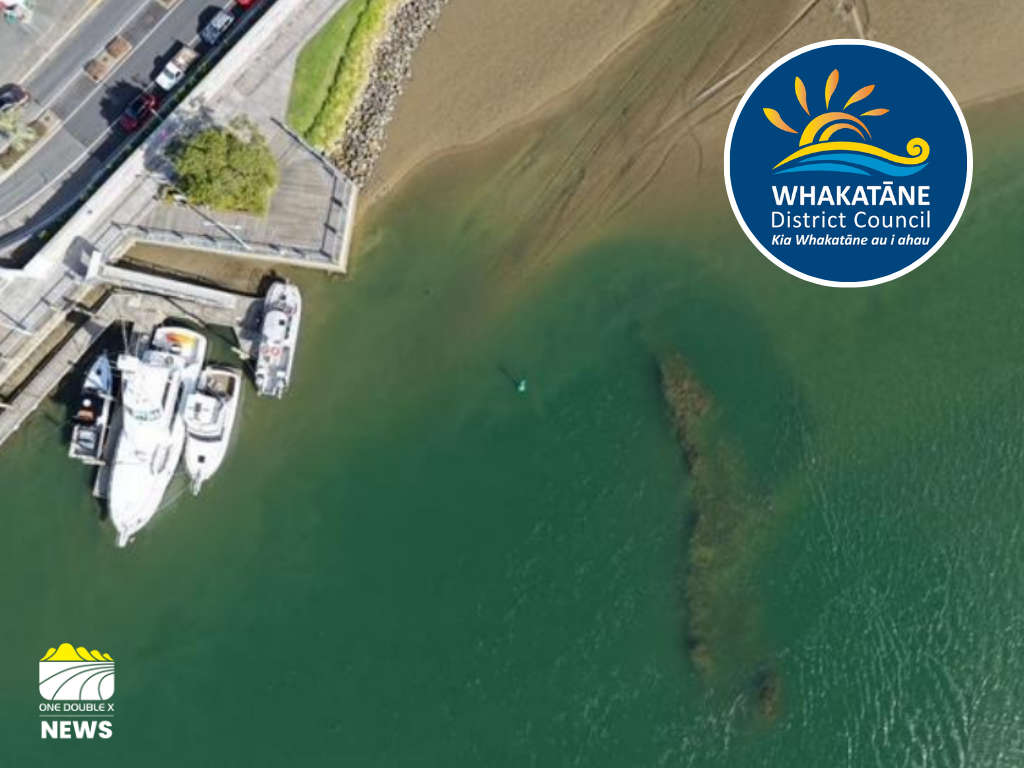
The decision followed a narrow council vote last week rejecting a Yacht Club offer to contribute $50,000 towards dredging a silted navigation channel between Ōtuawhaki Wharf and the marina.
Tánczos said councillors considered a range of views before reaching a decision.
“I think probably the key arguments in favour of us paying for that dredging, funding that dredging, were that we had done so in the past, going back almost 30 years. That the harbour fund should be spent on ports and harbour operations.”
However, he said concerns about the long-term financial sustainability of the harbour fund weighed heavily on the majority of councillors.
“The income of the harbour fund is fully spent on ports and harbour operating expenses, and in recent times, that’s started to go into deficit.”
Tánczos said that previously the harbour fund generated surpluses, but now operational costs are exceeding income.
“So increasingly ports and harbour operating expenses are gonna have to be topped up with rates.”
“Now, if we were to agree to fund dredging up to the yacht club, then that would mean we either have to borrow that money, and borrowing money for operating expenses is a really bad idea. It’s like taking out a mortgage to pay for your groceries,” he explained.
“And so we either take on more debt or we have to put the rates up.”
“I’m really aware that people are struggling right now. People are struggling just to pay the general, across-the-board cost of living increases.”
Tánczos said he could not support increasing rates to pay for what he described as a “private” facility.
“I, as a mayor, just can’t justify putting the rates up to fund dredging for essentially a private club.”
The mayor said councillors also considered the historical relationship between the council and the yacht club.
“Some councillors felt that it would be unfair to stop doing that.”
“My view and the view of the majority of councillors is that, actually, regardless of what happened in the past, we need to be financially prudent for our community today.”
Council estimates put the cost of a one-off remedial dredge at approximately $365,000, with ongoing maintenance dredging costing about $85,000 annually.
“It’s a fair chunk of money,” Tánczos said.
The Yacht Club’s offer to contribute $50,000 was ultimately insufficient to secure council support, he said.
“When we turned them down, they did come back with an offer to put in 50,000, which is one-seventh of the cost of that remedial dredge.”
“If we talk about equitable cost sharing, to my mind, that means at least 50-50.”
Tánczos said council policy provided for dredging up to Ōtuawhaki Wharf, while any dredging further upstream towards the yacht club would require shared funding arrangements.
“The public berths finish at Ōtuawhaki, and dredging up to the yacht club is really for the benefit of their club, not for the public.”
He also questioned the conditions attached to the Yacht Club’s proposal, noting the contribution was contingent on the club being satisfied with the dredging outcome.
“It was the amount that they were offering, which was a very small contribution to the cost […] and it was the kind of, without prejudice nature of it, that they simply don’t accept that they should have to contribute.”
“And in terms of the ongoing relationship, that can’t work.”
The mayor also rejected suggestions that the harbour fund held sufficient surplus funds to pay for the work without affecting rates.
“People seem to think that the Harbour Fund is some kind of unlimited pool of cash to be spent on anything related to the Harbour,” Tánczos said.
“You’ve got a capital asset. Most of it’s tied up in property, and the income is actually the income from the leases.”
“You don’t spend capital on operating expenses. You maintain the capital, you derive income from the capital, and the income is what you spend on operating expenses.”
He added that the fund generated about $2.6 million annually, which was already being used to cover port and harbour operations.
“The income of the Harbour Fund is about 2.6 million a year, something like that. That is currently all spent on ports and harbour operations.”
“There’s simply not the money there to incorporate this into existing budgets.”
Despite the decision, Tánczos said council had not ruled out future dredging and was trialling lower-cost alternatives to the cutter-suction dredging sought by the Yacht Club.
“If we find that we can do it within current budgets, as a continuation of the dredging that we currently do up to Ōtuawhaki, where the old isite was, if we can do that, then we can incorporate it within our current budgets.”
He said the council had also invited the Yacht Club to bring its case back through the Long-Term Plan process, where the proposal could be considered alongside other spending priorities and community feedback.
“And as part of the long-term plan, we also get to engage the community.”
“The feedback I’ve got so far is that people do agree with the council decision by and large.”
For Tánczos, the preferred outcome remained finding a lower-cost solution that would avoid further costs for ratepayers.
“No one’s got anything against the yacht club; it’s simply that we can’t justify spending public money on a private interest,” he said.
“Public money needs to be for public purposes.”
“But if we can do it without having to charge ratepayers extra money, then great, of course we would do that.”
The Whakatāne Yacht Club has warned the council’s decision could have serious consequences for the marina’s future, with manager Barry Cutfield describing it as a “death sentence” for the facility.
The club argues that continued sediment build-up is already restricting access and that without council-led dredging, the marina’s long-term viability is at risk.
 Police Crack Down on New Gang Chapters in Ōpōtiki
 Under the House to the Try Line: Ruby and Her 11 Pups Seek Forever Homes
 Eastern Bay Local Government Future Left in Limbo After Head Start Decision Delayed
 Hillcrest Road Closures Scheduled for Friday