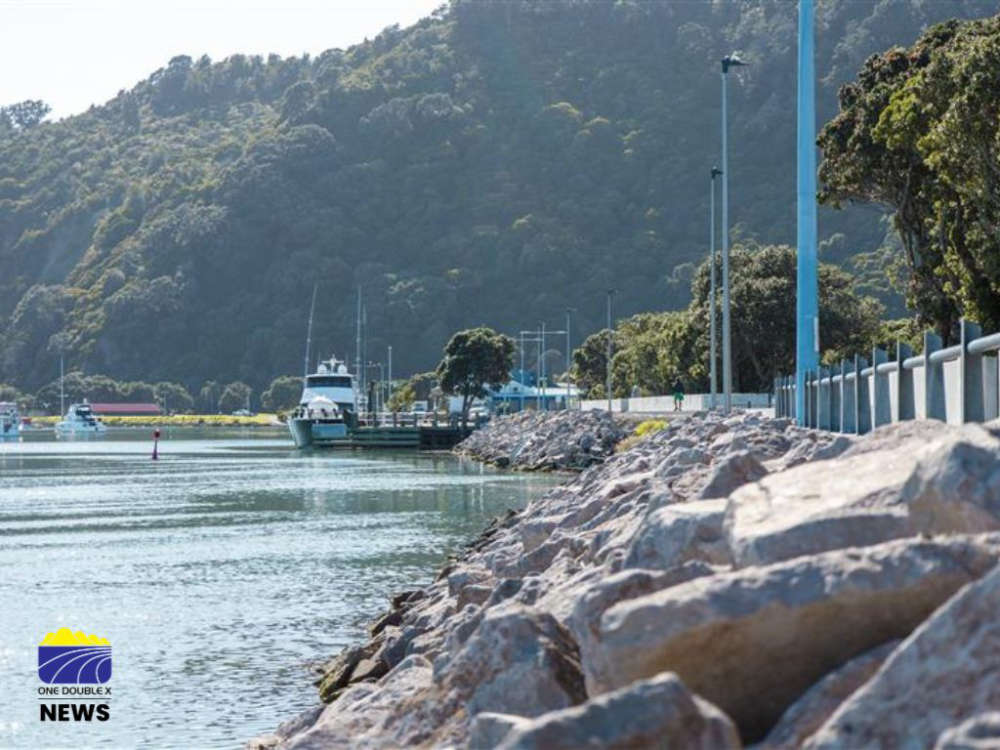
Work to reshape the Whakatāne riverfront is set to step up next week, with the removal of a long-standing waterfront building making way for upgraded flood defences.
Whakatāne District Council said demolition of the structure at 2 The Strand will begin from 6 May, as part of the wider ‘Project Future Proof’ flood protection works led by the Bay of Plenty Regional Council.
The building has housed well-known local businesses Gibbo’s on the Wharf and The Iceman, both considered fixtures of the riverfront for many years.
Council said the removal was necessary to allow for the realignment of a floodwall in front of the site, forming part of broader efforts to strengthen flood resilience along the Whakatāne River.
Mayor Nándor Tánczos said while some in the community had suggested doing nothing with the site, that was not an option.
“We don’t have an option to do absolutely nothing. The floodwall work that’s being done by the regional council means there are some things we have to do, including demolishing and moving some buildings.”
He said public consultation drew about 260 pieces of feedback, with a range of views on how much should be spent on the riverfront upgrade.
Around 15 percent of respondents favoured returning central government funding and limiting development, while about 10 percent supported a minimal approach using only co-funded investment. The majority, however, supported incorporating additional improvements into the design.
The project has a confirmed baseline budget of $7.5 million, jointly funded by the central government through Kānoa and council contributions already included in the long-term plan.
Mayor Tánczos said council would proceed with that core budget but had decided to hold back a further $2.1m previously earmarked for enhancements, citing cost-of-living pressures.
“We’re really aware of the pressure that the community’s under… so we’re looking to save that $2.1 million and put it back into the council budget.”
Potential extras, such as improved accessibility, shade structures, and recreational facilities, could still go ahead if external funding is secured.
“We’re really committed to seeking outside funding… not just grants but also commercial sponsorships and philanthropy,” said Mayor Tánczos.
Among the ideas raised were improved disability access, more shaded public spaces, and a possible basketball area near Mataatua Reserve, reflecting strong local demand for recreational facilities.
Council said further design work would now take place, incorporating community feedback where possible, before construction is sequenced over the coming stages.
People in the area can expect increased activity, including heavy machinery and temporary disruption, once demolition begins next week.
 Te Tāhuhu o Te Rangi Invites Local Residents to Celebrate Te Wiki o te Reo Māori
 Body Located During Search for Missing Man
 SH2 Near Te Puke Golf Course to Close This Weekend for Railway Crossing Repairs
 Volunteers Aid Search for Missing Ōpōtiki Man