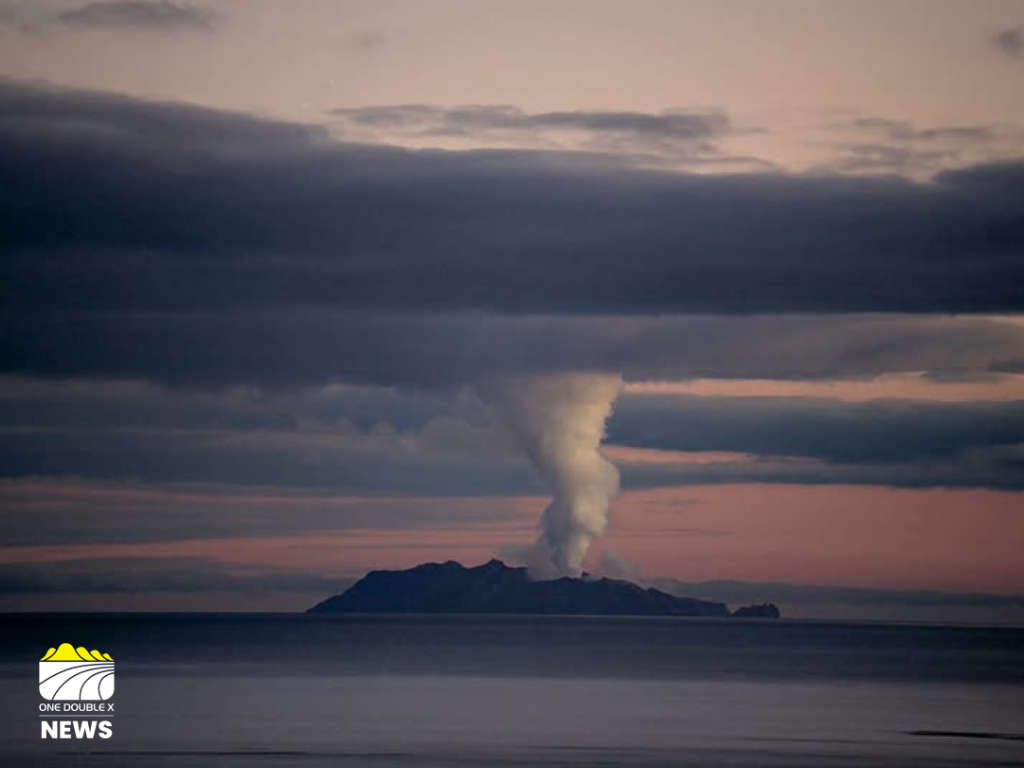
Earth Sciences New Zealand (ESNZ) said no eruptive activity has been detected at Whakaari White Island, despite large steam and gas plumes visible from the Bay of Plenty coast over the past week.
In its latest volcanic activity bulletin, released on Wednesday, October 14, the agency confirmed the Volcanic Alert Level remains at Level 2, with the Aviation Colour Code at Yellow.
The prominent white plumes were enhanced by calm atmospheric conditions, with satellite observations detecting increased concentrations of sulphur dioxide gas on October 9 and 10.
However, no volcanic ash was detected in the atmosphere, and an observation flight on October 12 found no signs of recent explosive activity.
Vent temperatures also remained relatively low, at below 100 degrees Celsius.
ESNZ said the plumes are a common feature of Whakaari's non-eruptive activity, originating from active vents within the main crater.
The plumes are mostly made up of water vapour, with smaller amounts of sulphur and carbon gases.
“When combined with the right atmospheric conditions (still conditions, colder temperatures, and humidity) these plumes can increase in size,” it said.
Despite the lack of eruptive activity, officials warn the volcano could become more active with little or no warning, potentially affecting the crater floor and the immediate vicinity of the island.
ESNZ said a lack of real-time monitoring data from the island means scientists cannot distinguish between Volcanic Alert Levels 1 and 2.
“As a result, Whakaari/White Island will remain at a minimum of Volcanic Alert Level 2 and Aviation Colour Code Yellow until on-island monitoring is reinstated,” it said.
Carbon dioxide and sulphur dioxide emissions have fluctuated between measurement flights, but the overall trend has been downward since December 2024.
The Earth Sciences New Zealand Volcano Monitoring Group and National Geohazards Monitoring Centre will continue to monitor the volcano, with further updates to be provided if new information becomes available or its status changes.
 Victor Luca to Challenge Local Government Reforms and Push Climate Education at Regional Council
 Delays Expected on SH2 Near Matatā as Slip Safety Work Begins
 One Critically Injured Following Te Puke Highway Crash
 Fatal Crash on Orete Point Road in Waihau Bay