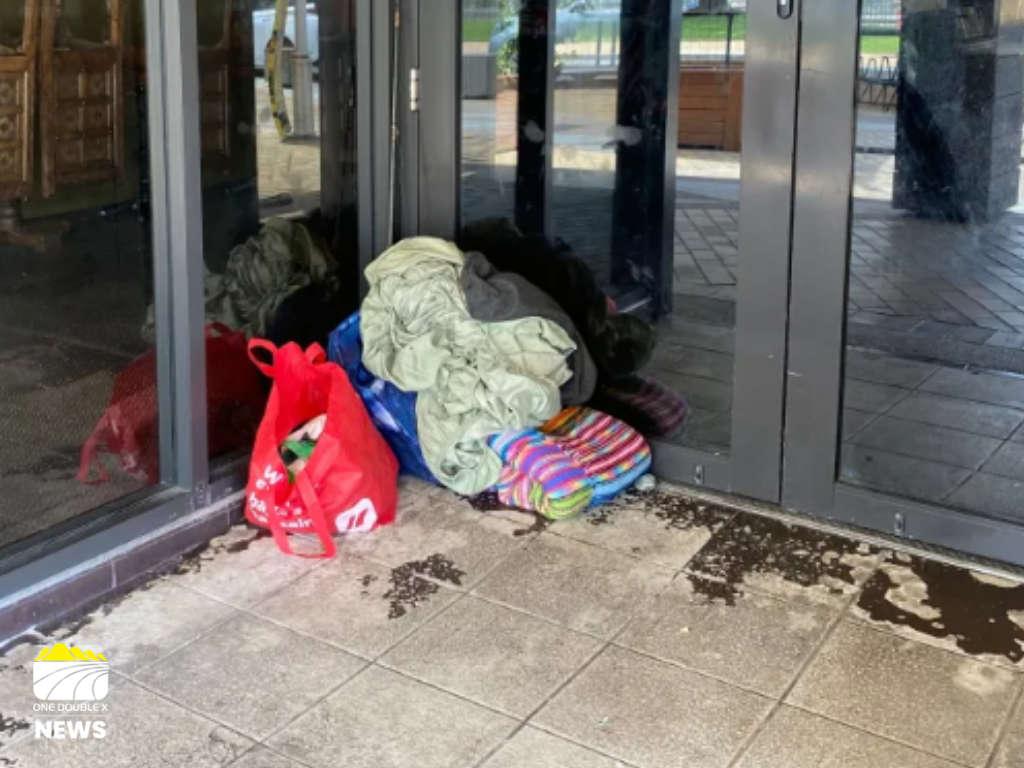
More support is on the way for people experiencing homelessness in Whakatāne, with the Government confirming the district will be one of six new locations to receive targeted funding aimed at supporting rough sleepers and vulnerable whānau.
The announcement forms part of a $14.54 million Government investment into homelessness support services across New Zealand, with Whakatāne identified alongside Tauranga, New Plymouth, Napier, Whanganui and Waimakariri as communities where unmet need has been identified.
Housing Minister Chris Bishop and Associate Housing Minister Tama Potaka said the funding would help expand outreach and support services while strengthening existing programmes already operating in Auckland, Hamilton, Wellington and Christchurch.
According to the Government, $2.7 million of the funding package will be used to extend support services into the six additional locations.
Waiariki Whānau Mentoring Trust Rangatira, Waata Heathcote, welcomed the announcement, saying additional support for people experiencing homelessness was urgently needed.
“Certainly the continuation of support to our most marginalised, which obviously are our rough sleeping whānau,” Heathcote said.
“So that extra support, especially in this time of the cost of living, just supports and values the mahi the likes of ourselves have been doing within this particular space for the last three and a half years.”
He said homelessness was often the visible outcome of much deeper issues affecting individuals and families.
“I think homelessness, if we’re talking about homelessness specifically, obviously a lot of that derives from trauma,” he said.
“I think homelessness is just a symptom of much larger issues.”
Waiariki Whānau Mentoring has already been receiving government support to help deliver outreach services, with staff working directly with rough sleepers and vulnerable people throughout the district.
“We’ve been provided with funding support to support capacity, i.e. staff to be on the ground to assess, but also to support those that are living extremely rough,” Heathcote said.
He said many people experiencing homelessness remain largely unseen by the wider public.
“There’s also a lot of observation within the community now where those that are rough sleeping are seen in public, but also there are still some that aren’t seen that are living in some pretty ravaged situations within the local CBD itself.”
While welcoming Government support, Heathcote said community action remained essential in addressing homelessness.
“I’ve always maintained the whakaaro around the community being the solution to certain initiatives and/or kaupapa within the community,” he said.
“So it’s not just a Crown issue; it’s also a community issue, and it’s how we all come together collectively in terms of providing solutions to support the most vulnerable.”
He pointed to initiatives such as Waiariki Whānau Mentoring’s social supermarket and Orange Sky’s mobile laundry service as examples of community-led responses already making a difference.
“The social supermarket. It’s not government-funded. It’s supported by the community, and it’s another way of giving without depending on the Crown for funding.”
“The other one is Orange Sky, our mobile laundry and washing service here in Whakatāne, which is free to the community, especially those who are living rough.”
Community support has also included donations of clothing, blankets, food and volunteer time.
“Our clothing, the providing of warm blankets, especially at this time of the year,” Heathcote said.
“Not only that, but community have come in at all different types of angles to best support where they can, whether or not that’s providing kai for those that are living rough, but also just to be there with respect to volunteering.”
While some people have successfully transitioned into housing, Heathcote said recent weeks had seen new challenges emerge.
“We’ve been able to get some of them into accommodation, some of them into housing,” he said.
“But what we have seen, especially in the last month, is also unfamiliar faces, not familiar to Whakatāne itself, that have come in from other regions.”
“So we’ve got our eye on that at the moment and are supporting several of those whānau at this point too who are finding themselves in some pretty vulnerable situations.”
He said many rough sleepers were highly transient, often moving between communities after relationships and support networks had broken down elsewhere.
“Some of those that do live very rough have burnt bridges in other communities.”
“And so because of the transience of that particular space or that particular population of people, they move from location to location.”
East Coast MP Dana Kirkpatrick said local organisations had raised concerns about a lack of support options available for rough sleepers in the district.
“There is money being allocated directly to Whakatāne to help with the rough sleepers and some support for those people,” Kirkpatrick said.
She recently met with Have A Heart, the Salvation Army, Liberty Church and community policing representatives to discuss the issue.
“Their concern was that there was no way for them to take these people and the support mechanisms weren’t necessarily already there.”
“And so this money is a great response to their concerns, which were then relayed to the minister.”
Kirkpatrick said the Ministry of Housing and Urban Development would now work with local providers to determine how services would be delivered.
“What we know is that the local people know what the best solutions are and know the best delivery mechanisms.”
“So they’ll be working with them to work through that.”
While no specific timeline has been confirmed, Kirkpatrick said she expected support to be rolled out quickly.
“I would expect that we would be looking for that to happen pretty quickly, given that it is midwinter and now seems to be a good time for that to happen.”
The latest funding builds on measures announced by the Government late last year, including an additional 300 Housing First social homes, expanded transitional housing programmes and increased outreach services.
According to the Government, since September 2025, a total of 674 households that had been sleeping rough have moved into stable housing through Housing First and existing social housing placements.
The Government also says housing assistance centres have delivered more than 1,500 support activities, including mental health support, addiction services and assistance accessing benefits.
Associate Housing Minister Tama Potaka said homelessness required more than simply providing housing.
“We know homelessness goes beyond just a house. It can involve challenges with health, employment, addiction, family relationships, or access to services.”
“Community organisations and frontline providers play a critical role in supporting vulnerable people. This investment will help strengthen that work and ensure more people can access the services available to them.”
For Heathcote, the focus remains unchanged regardless of funding levels.
“If people are requiring support, irrespective of their ethnic background, by the way, irrespective of their ethnic background, our doors are always open, and we won’t turn anybody down.”
“We’re not the only gate, but we’re a critical gate when it comes to the most marginalised in this community.”
“The funding support that the government have announced as of yesterday into a smaller region like Whakatāne, it’s demonstrated that there is a need here, and so I want to acknowledge the government for that.”
 Te Tāhuhu o Te Rangi Invites Local Residents to Celebrate Te Wiki o te Reo Māori
 Body Located During Search for Missing Man
 SH2 Near Te Puke Golf Course to Close This Weekend for Railway Crossing Repairs
 Volunteers Aid Search for Missing Ōpōtiki Man